Why Manufacturing Should Begin With Engineering
Turning a CAD model into a physical product sounds straightforward.
Upload a drawing, select a material, manufacture the part, and ship it.
In reality, successful manufacturing requires much more.
Material selection, machining strategy, tolerances, surface finish, tooling, inspection, production volume, and delivery requirements all influence the final result.
At BoValley, we believe the best manufacturing process starts before the machine begins cutting material.
Engineering Review Comes First
A manufacturing project begins with understanding the design.
Our engineering team reviews the available CAD files and technical drawings to identify manufacturing considerations such as:
- Critical dimensions
- Tight tolerances
- Thin walls
- Deep cavities
- Internal features
- Threads
- Hole sizes
- Material requirements
- Surface finish
- Assembly interfaces
The objective is not simply to identify problems.
The objective is to find practical ways to manufacture the part more efficiently while maintaining the customer’s functional requirements.
Choosing the Right Manufacturing Process
Different parts require different manufacturing technologies.
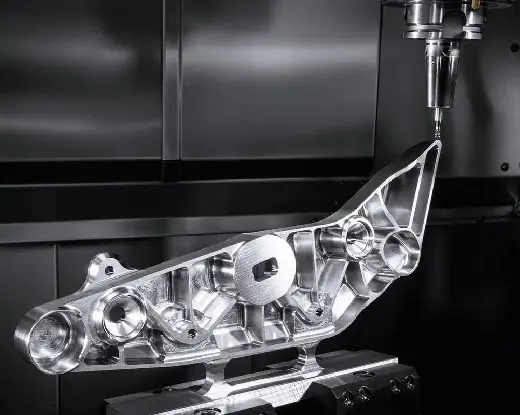
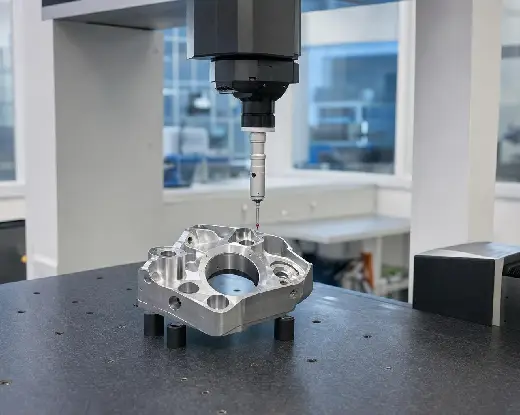
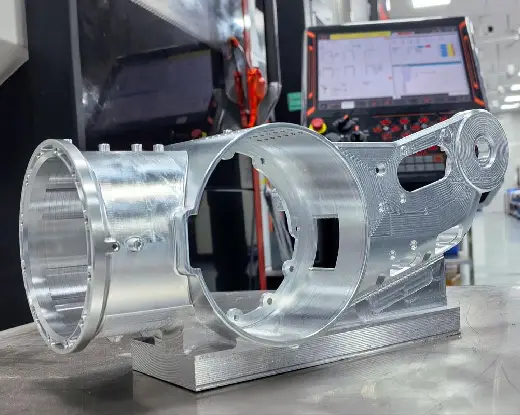
A complex aluminum bracket with tight tolerances may be better suited to CNC machining.
A protective equipment enclosure may be more efficiently produced through sheet metal fabrication.
A plastic housing requiring thousands of identical parts may be better suited to injection molding.
A highly complex prototype requiring fast design iteration may benefit from 3D printing.
The right manufacturing process depends on:
Geometry + Material + Quantity + Tolerance + Application + Cost + Lead Time
This is why BoValley provides four major manufacturing technologies rather than forcing every project into one process.
CNC Machining for Precision Components
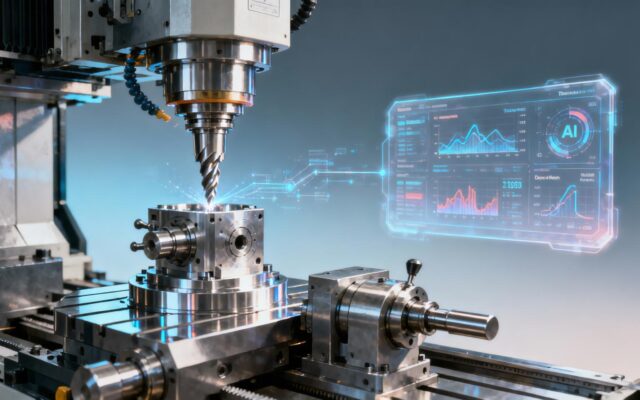
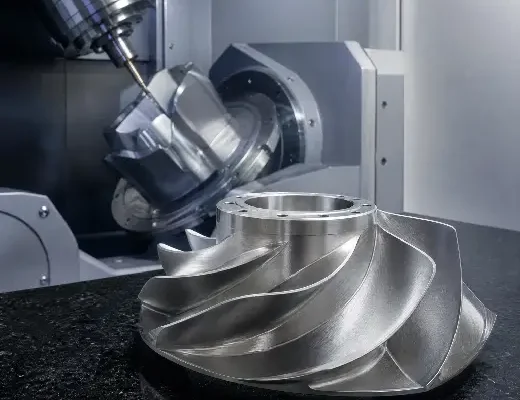
CNC machining remains one of the most versatile manufacturing technologies for precision metal and engineering plastic components.
Depending on the design, multi-axis machining can reduce setups and improve access to complex features.
Typical CNC applications include:
- Automotive components
- Aerospace components
- Robotics parts
- Optical components
- Industrial equipment
- Electronic housings
- Mechanical brackets
- Functional prototypes
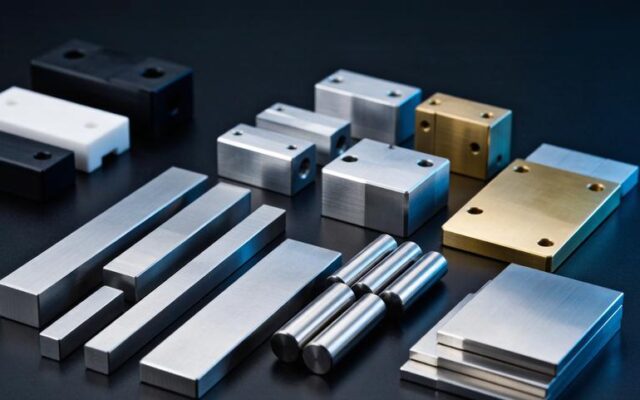
Materials can include aluminum, stainless steel, steel, brass, copper, titanium, engineering plastics, and other materials depending on project requirements.
Quality Is Part of the Manufacturing Process
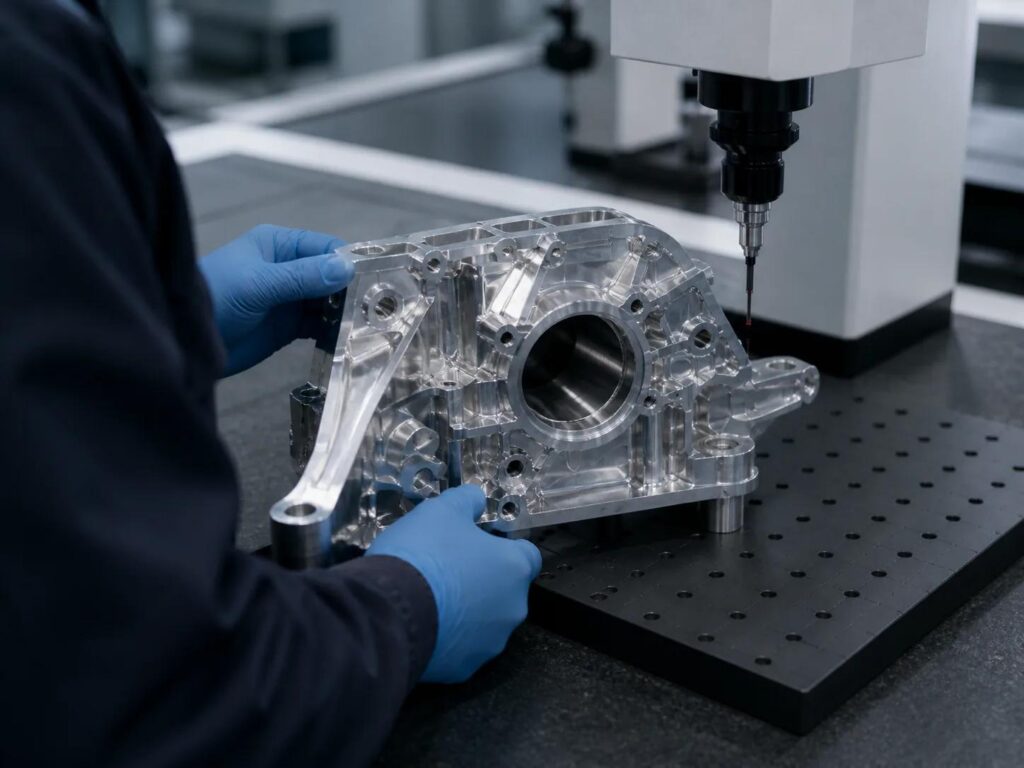
Precision machining without precision inspection is incomplete.
At BoValley, quality control is designed to operate throughout the manufacturing process.
A typical quality workflow can include:
Engineering Review
↓
Material Verification
↓
First Article Inspection
↓
In-Process Inspection
↓
Final Inspection
↓
Quality Documentation
Depending on project requirements, customers may require dimensional reports, material certificates, CMM inspection reports, certificates of conformity, or other documentation.
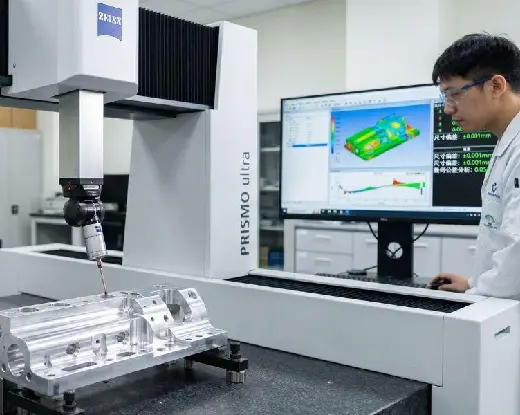
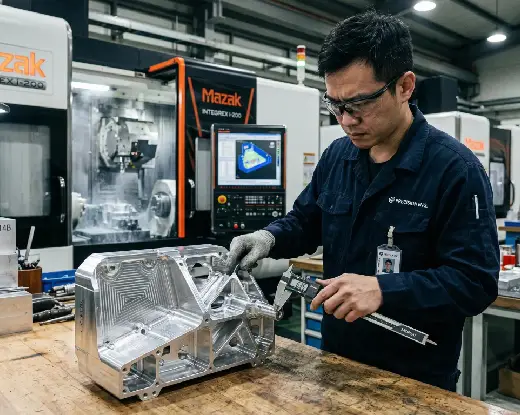
Advanced manufacturers increasingly treat inspection and documentation as part of the production workflow rather than an optional final activity. Protolabs, for example, highlights automated CMM inspection and quality documentation within its manufacturing services.
Why First Article Inspection Matters
The first part from a production process provides an important opportunity to confirm that manufacturing is aligned with the engineering requirements.
Instead of waiting until an entire batch has been completed, critical dimensions can be reviewed earlier.
If a potential deviation is identified, the manufacturing process can be adjusted before producing the remainder of the order.
This approach helps reduce:
- Rework
- Scrap
- Production delays
- Batch-wide quality problems
Consistency Matters More Than One Perfect Part
Producing one excellent prototype is not enough.
The real challenge begins when customers need repeated production.
A manufacturing process must be capable of producing parts consistently across different batches.
That requires control over:
Machine capability
Tooling
Process parameters
Material
Inspection
Operator procedures
Production environment
For BoValley, this is an important principle:
Quality is not a final inspection result. Quality is the result of a controlled manufacturing process.
From Prototype to Production
A successful prototype should do more than demonstrate appearance.
It should help answer important engineering questions:
- Does the part fit?
- Does the assembly work?
- Does the material perform as expected?
- Are tolerances appropriate?
- Can the part be manufactured economically?
- Can the design transition to production?
This is why manufacturing expertise becomes particularly important during the transition from prototype to production.
The manufacturing method used for one prototype may not necessarily be the best method for 10,000 production parts.
BoValley works toward selecting manufacturing solutions based on the entire product lifecycle—not simply the first order.
Manufacturing With a Long-Term Perspective
Our goal is not to manufacture one order and move on.
We want to build long-term relationships with product companies that need a dependable manufacturing partner.
Whether the requirement is:
1 prototype
or
100 low-volume parts
or
recurring production
the principles remain the same:
Understand the design.
Choose the right process.
Control the manufacturing.
Verify the quality.
Deliver reliably.
That’s how BoValley approaches precision manufacturing.
From Prototype to Production.
From Ideas to Reality.