
Interface & Drawing Review
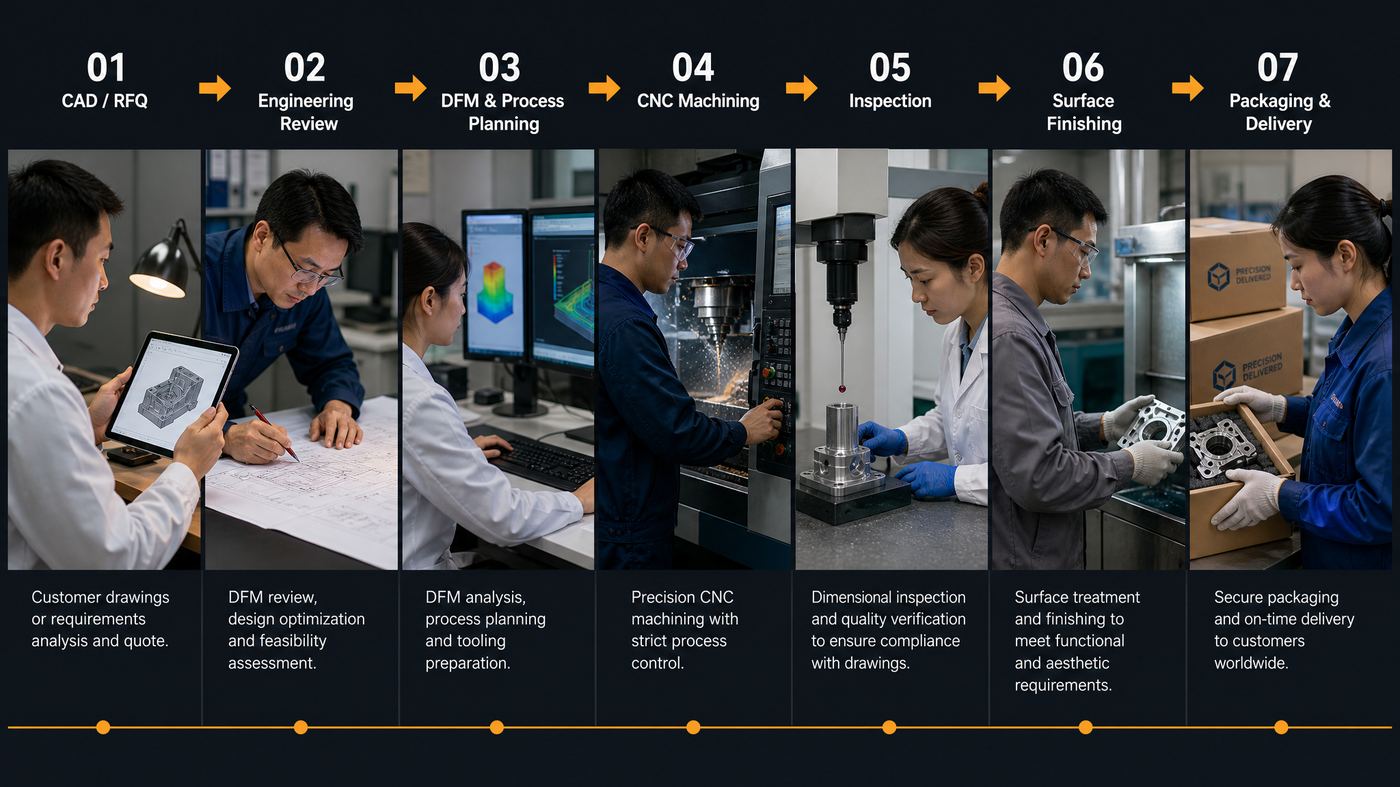
Review dimensions, bore and thread specifications, mounting datums, mating surfaces, and customer-defined alignment requirements.
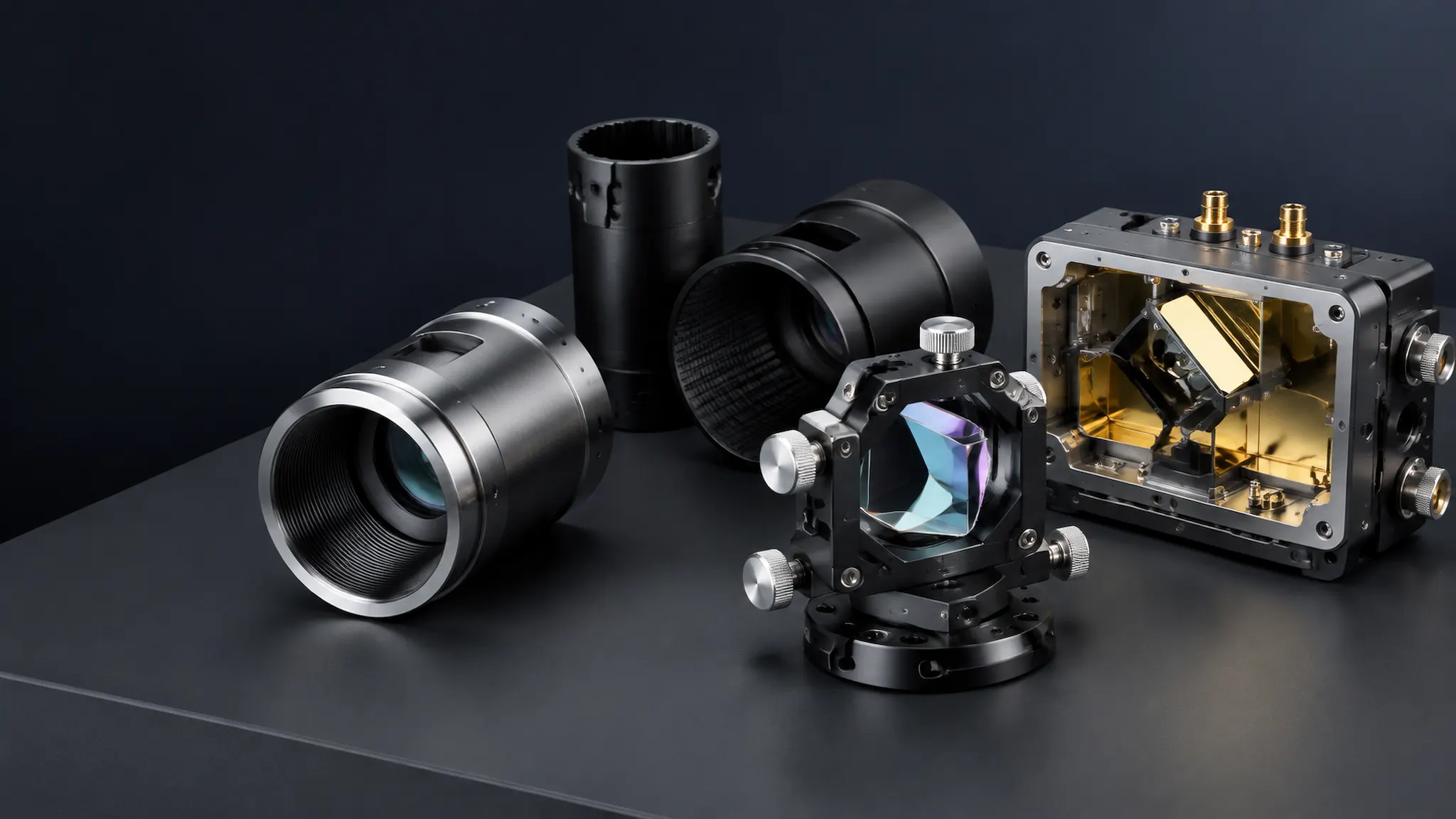
Industries / Optomechanical Components
Custom mechanical parts for optical assemblies, photonics equipment, imaging systems, and precision instrument development.
Manufacturing requirements depend on the optical design, alignment method, environmental conditions, and assembly process.
Review dimensions, bore and thread specifications, mounting datums, mating surfaces, and customer-defined alignment requirements.
Evaluate CNC machining and other suitable processes for optical mounts, housings, brackets, adapters, and support structures.
Support the manufacturing of parts with defined mounting and mating features. Final optical alignment and performance testing remain dependent on the customer's system and validation procedures.
Coordinate updated drawings, revised interfaces, and repeat manufacturing requirements as the optical assembly develops.
Discuss surface condition, burr removal, coatings, and finish requirements where relevant.
Engineering Support for Precision Mechanical Interfaces
Clarify bores, threads, shoulders, mounting patterns, datums, and assembly interfaces.
Discuss tool access, feature geometry, setups, thin walls, and practical process options.
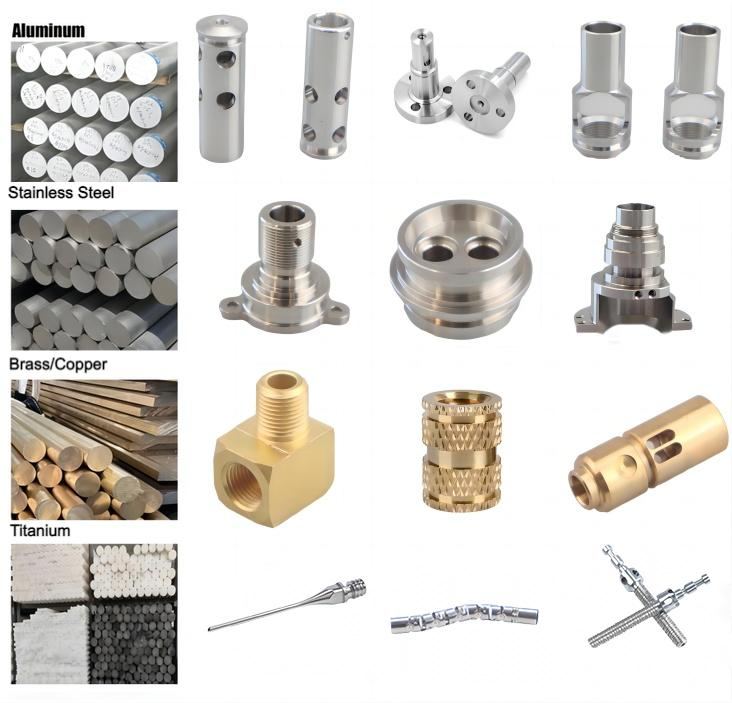
Compare aluminum, stainless steel, and suitable engineering plastics according to stiffness, weight, thermal environment, and intended use.
Identify critical dimensions and geometric relationships that require customer confirmation.
Manufacturing Processes for Optomechanical Parts
A key process for custom mounts, lens barrels, adapter rings, housings, and parts with defined bores, threads, and mounting surfaces.
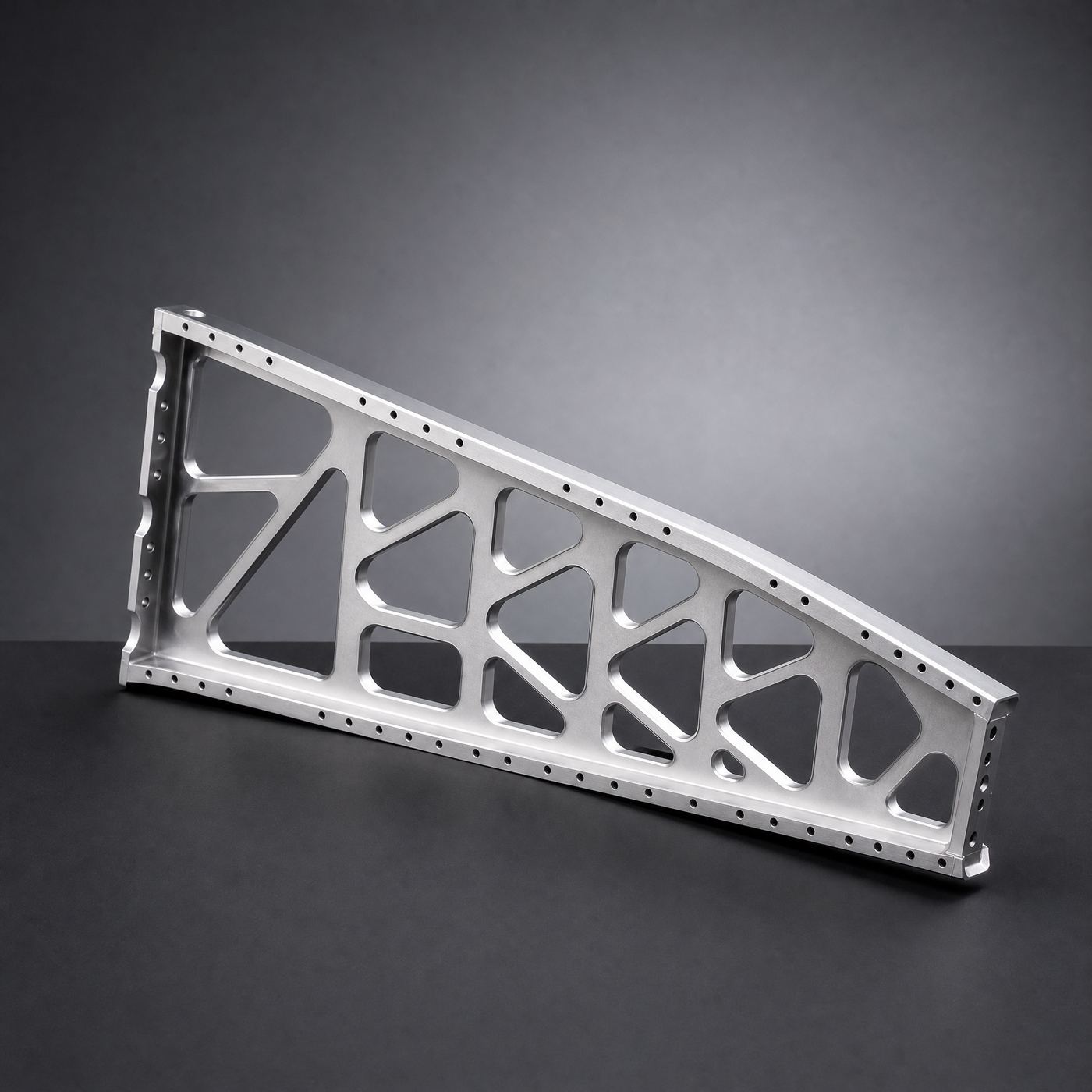
For equipment panels, instrument frames, covers, and supporting brackets where the design is suitable for formed sheet metal.
For suitable non-optical plastic housings, covers, and structural components when repeatable molded geometry is required.
For selected non-critical prototypes, complex housings, assembly concepts, and fit-check parts.
The quality requirements for optomechanical parts depend on how their dimensions affect optical positioning, mechanical stability, assembly repeatability, and the intended operating environment.
 Materials
 Applications
Custom Components for Optical & Imaging Systems
Resources for Optomechanical Engineering
Explore options for precision mechanical interfaces and machined housings.
Learn More
Learn about cylindrical parts, rings, spacers, and threaded components.
Learn More
Explore manufacturing examples for a mirror mount, a lens barrel and a laser collimator housing.
Read Case StudiesShare your CAD files and project requirements. An engineer will review the details and follow up with pricing and any manufacturability questions.