
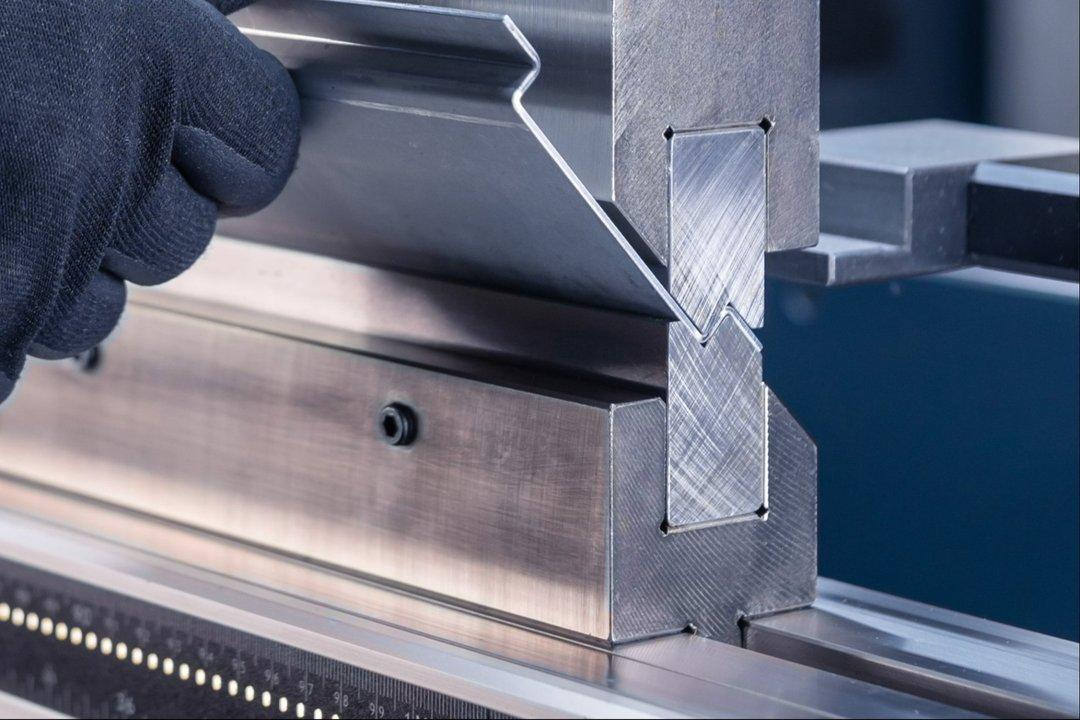
Bending and Forming Design Guide
We review material properties, sheet thickness, bend geometry, hole locations and dimensional requirements to help plan a practical forming approach.
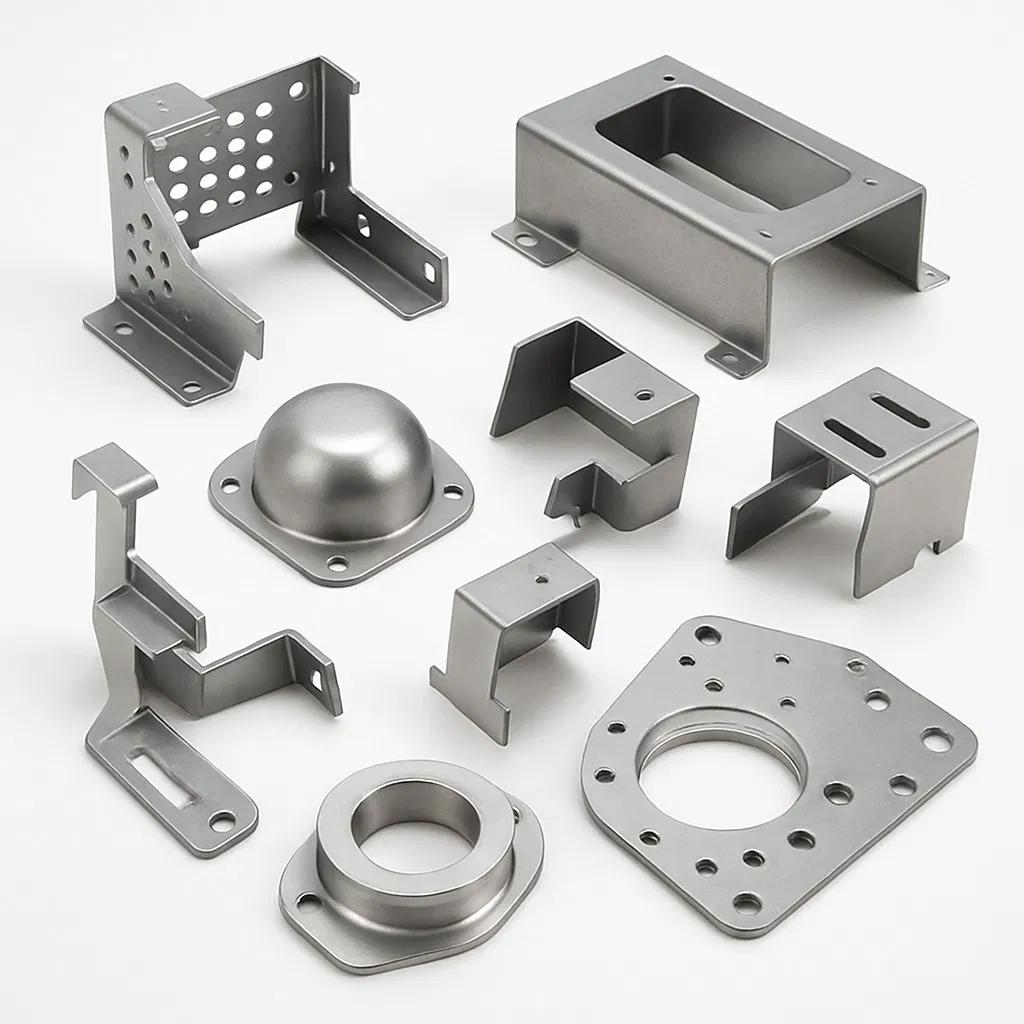
Get the Guide With Your QuoteBoValley supports sheet metal bending and forming for custom brackets, panels, enclosures, frames and other three-dimensional components. Flat sheet blanks can be formed into functional parts with defined bends, flanges, channels and return edges.
Overview
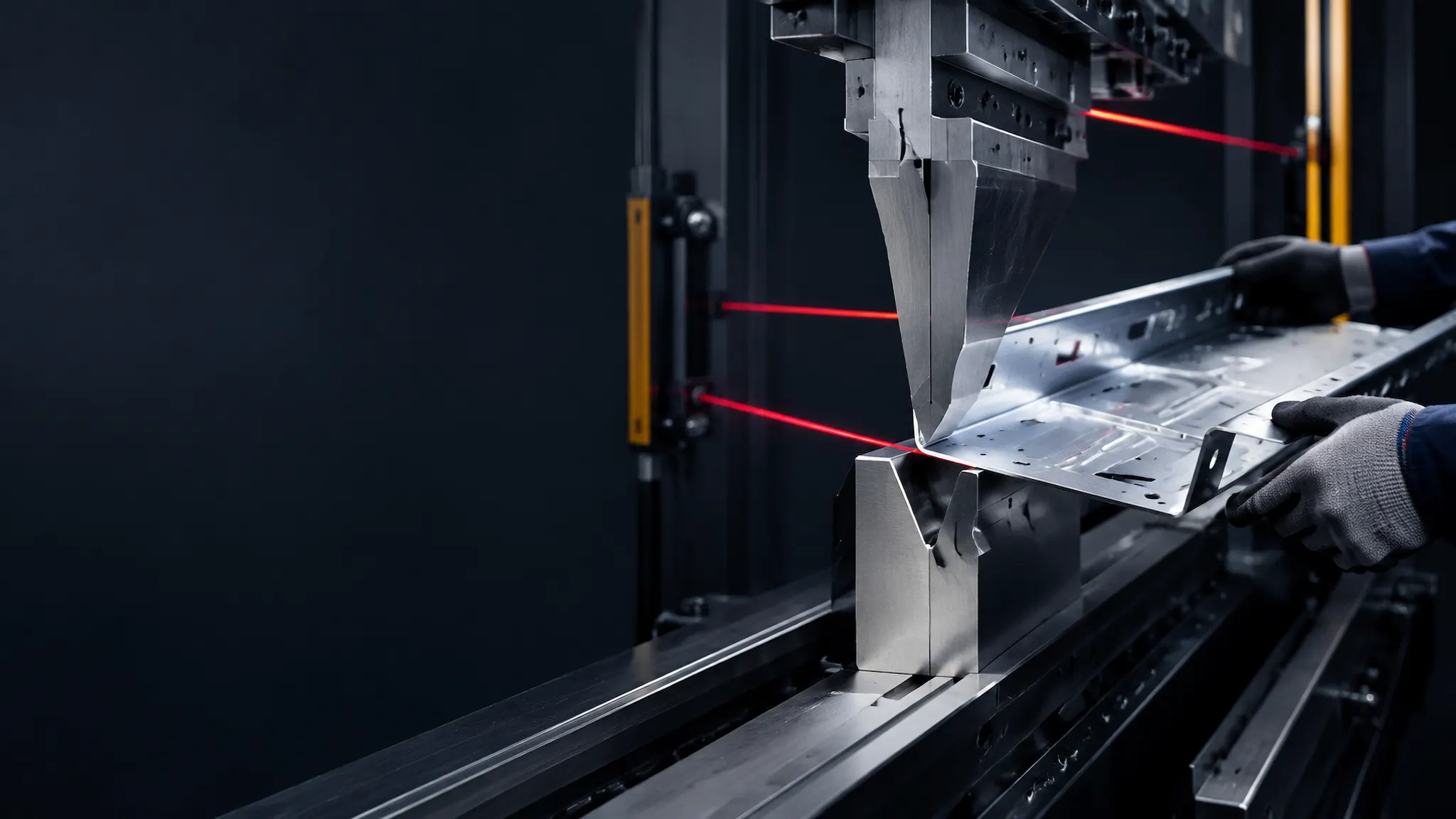
Sheet metal bending uses a press brake or other suitable forming equipment to create angles and flanges along defined bend lines. Additional forming methods may be used for selected shapes and applications.
The final geometry depends on material grade, thickness, bend radius, tooling and springback. Hole-to-bend distances, relief cuts and the flat pattern must be considered during design.
For assemblies, bending should be coordinated with cutting, welding, finishing and installation requirements.
We review material properties, sheet thickness, bend geometry, hole locations and dimensional requirements to help plan a practical forming approach.
Get the Guide With Your QuoteReview the formed dimensions, sheet thickness, bend radius and tool clearance together. A short flange or a hole near a bend can change the forming plan.
 Materials
Good bend design helps improve manufacturability and dimensional consistency. We review material thickness, bend radius, flange length, hole-to-bend distance, and tolerance requirements when evaluating your project.
Choose the finish for the sheet grade, visible faces, and operating environment. Allow for edge cleanup and protect critical surfaces during forming.
| Finish | Description |
|---|---|
| Deburred | Remove sharp edges to meet handling and assembly requirements. |
| Brushed or grained | Specify the visible face and grain direction for suitable materials. |
| Protective coating | Select a coating for the substrate and environment. Specify color, texture, and masking where needed. |
The Process
Start from the formed drawing and review the flat pattern for bend allowance and reliefs. Cut the blank, then form its bends in a sequence that leaves room for the tooling. Check angles, flange lengths and mounting features after forming. Account for springback when planning the operation.
 Quality
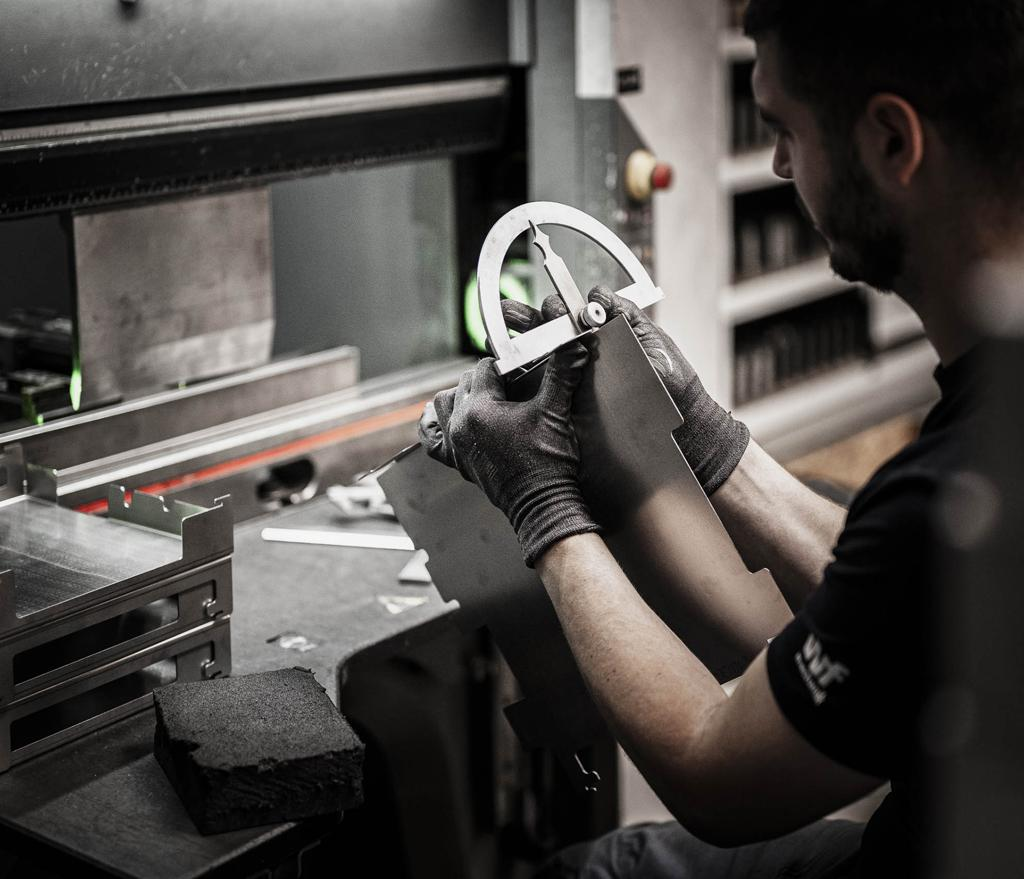
Use bends and flanges to stiffen panels, create mounting faces and shape covers from flat sheet. Confirm dimensions on the formed part where the bend controls fit.
Form folded panels, mounting flanges, and cabinet brackets.
Create guards, supports, and access panels for machinery.
Form mounting brackets, covers, and structural trial parts.
Produce folded brackets and guards for automation assemblies.
Form equipment panels and brackets with mounting and cable access.
Form instrument covers, trays, and support brackets for equipment projects.
| Types of Parts | Function |
|---|---|
| Formed brackets | Create mounting flanges with controlled hole-to-bend spacing. |
| Channels and rails | Stiffen or locate mating components along a formed profile. |
| Enclosure panels | Join folded panels with defined edge and seam requirements. |
Upload your CAD file today — get a detailed quote with DFM feedback within 24 hours.