
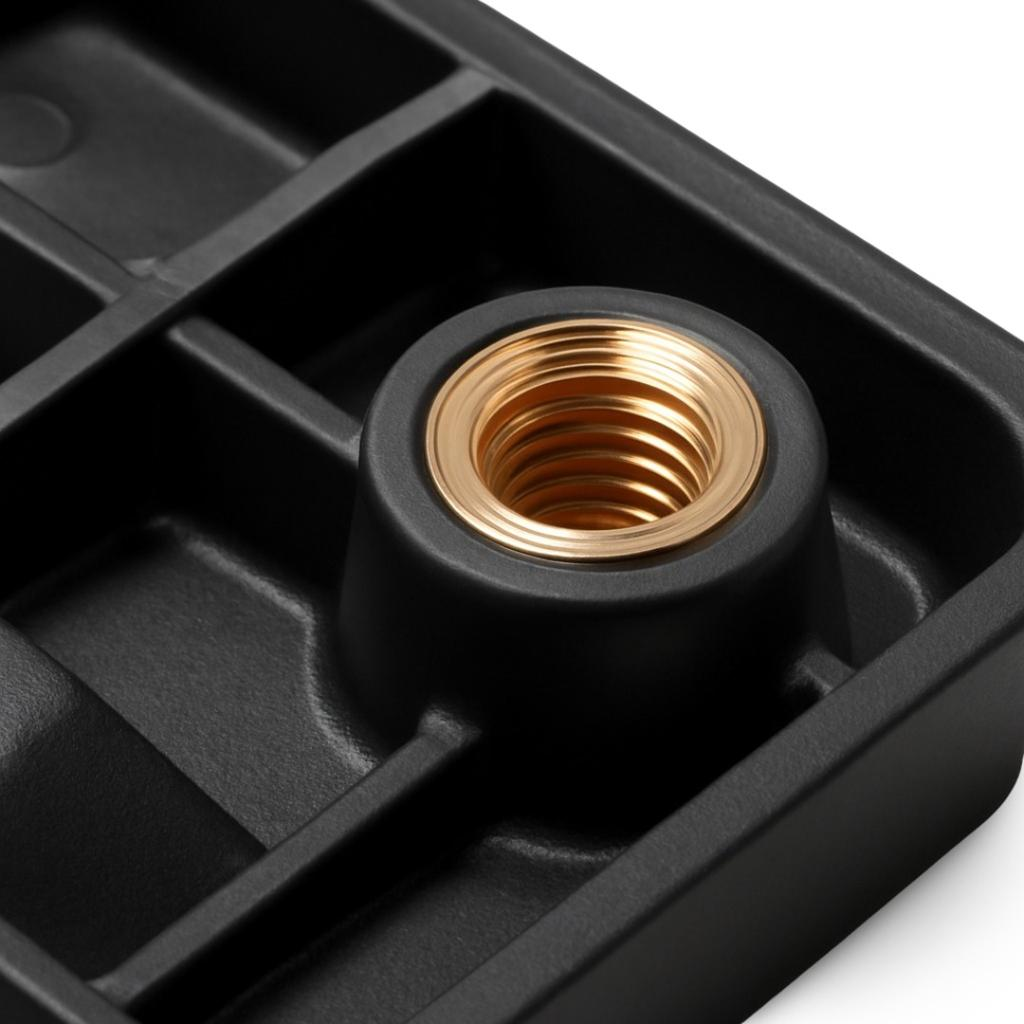
Insert Molding Design Review
Specify insert orientation and retention, then review plastic flow and wall thickness around the insert.
Request a Design ReviewCombine metal inserts and molded plastic in a single component. Insert molding can help integrate fastening features, electrical contacts, and structural elements into custom plastic parts.
Overview
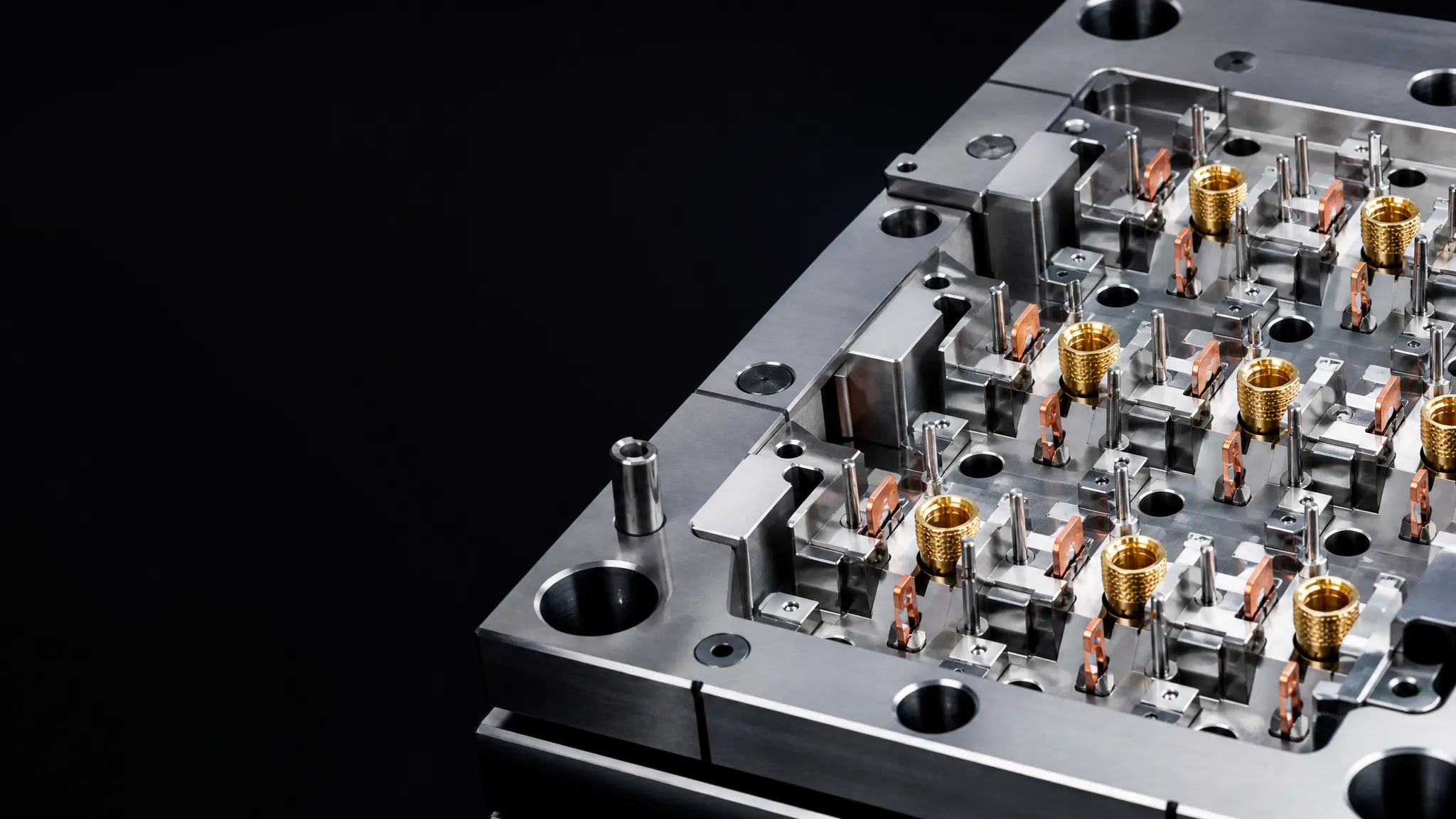
Insert molding is an injection molding process in which a pre-made insert is placed into the mold before plastic is injected around or over selected areas of it. The insert becomes integrated into the finished component once the plastic has solidified.
Common inserts include threaded metal bushings, pins, sleeves, contacts, and other compatible components. The design must account for insert positioning, plastic flow, retention, thermal compatibility, and the forces expected during use.
Insert geometry, mold design, and loading methods should be reviewed together to reduce the risk of insert movement, incomplete encapsulation, or damage during molding.
Specify insert orientation and retention, then review plastic flow and wall thickness around the insert.
Request a Design ReviewOur basic guidelines for Insert Molding include important design considerations to help improve part moldability, enhance cosmetic appearance, and reduce overall production time.
 Materials
Review insert metal, surface treatment, and resin as a system. Material selection should account for retention, loading, and the part’s operating conditions.
Choose materials and finishes based on your part's mechanical properties, operating environment, appearance, and application requirements.
| Parameter | Project Considerations |
|---|---|
| Process | Insert molding |
| Insert Types | Threaded bushings, pins, sleeves, contacts, and other compatible inserts |
| Insert Materials | Commonly selected metals such as brass or steel, subject to project requirements |
| Plastic Materials | ABS, PC, PA, POM, PP, and other compatible resins, subject to design and availability |
| Insert Positioning | Defined by mold design, locating features, and loading method |
| Retention Requirements | Depends on insert geometry, plastic design, process, and applied loads |
| Dimensional Control | Includes insert location, exposed height, surrounding plastic geometry, and critical mating features |
| Quality Checks | Visual inspection, dimensional checks, and agreed retention or functional tests |
| Production Quantity | Depends on part design, tooling strategy, and loading method |
The Process
01. Insert and Part Design Review: Review insert material, geometry, retention features, plastic resin, and functional requirements. 02. Insert Positioning: Define how inserts are located and retained during the molding cycle. 03. Plastic Injection and Cooling: Inject the selected resin around the designated insert areas and allow the part to solidify. 04. Inspection and Functional Checks: Inspect insert location, encapsulation, appearance, and agreed retention or assembly requirements.
 Quality
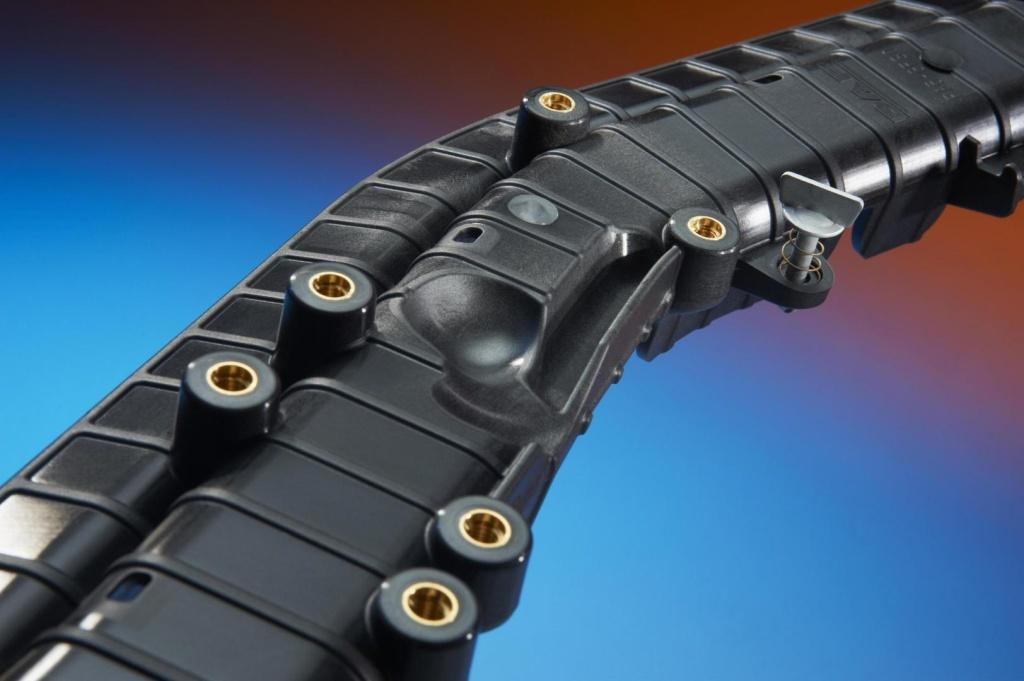
Insert molding is useful when a plastic part needs a durable thread, an electrical contact or another embedded component.
Mounting points and reinforced fastening features.
Selected connector bodies and contact assemblies.
Plastic parts with embedded metal interfaces.
Components that combine plastic geometry with metal functionality.
parts with metal bushings or locating pins
components requiring integrated inserts
| Types of Parts | Function |
|---|---|
| Threaded bosses | Add a durable metal fastening interface within a plastic part. |
| Electrical contacts | Locate metal contacts in an insulating molded body. |
| Locating sleeves | Provide a wear or alignment surface within the molded geometry. |
Share your CAD files and project requirements. An engineer will review the details and follow up with pricing and any manufacturability questions.