
Injection Molding Design Guide
Everything from quoting and DFM analysis to best practices that keep your family or multi-cavity tool balanced and your parts consistent.
Get the Guide With Your QuoteMaximize each shot with multiples of the same or different parts from a single mold.
Overview
Family molding and multi-cavity molding are techniques used to produce multiple parts from a single mold. Rather than producing a single part with each cycle, multiple parts can be produced with a single shot.
Multi-cavity molding describes a tool with the same cavity repeated to produce multiples of the same part. Family molding describes a tool with various cavity designs — such as left- and right-hand components that mate together — all shot in one tool.
If you have ever built a plastic model kit, you have worked with parts made in a family mold: the runners between each part are left intact, and each part is broken off the frame.
Everything from quoting and DFM analysis to best practices that keep your family or multi-cavity tool balanced and your parts consistent.
Get the Guide With Your QuoteOur basic guidelines for multi-cavity and family injection molding include important design considerations to help improve part moldability, enhance cosmetic appearance, and reduce overall production time.
 Materials
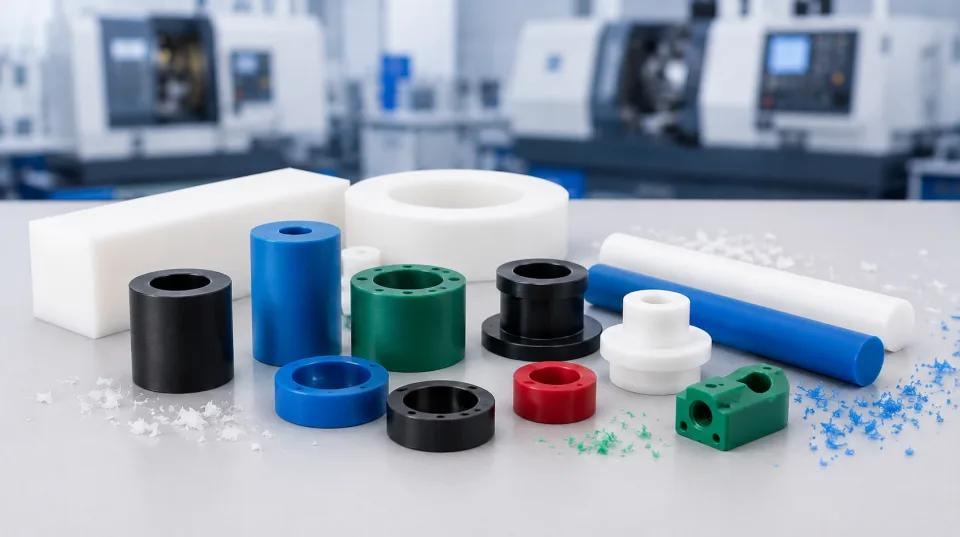
Family and multi-cavity tools can run the full range of engineering thermoplastics and liquid silicone rubber. All cavities in a tool must use the same resin and color so that shrinkage and fill stay balanced.
Standard finish options available for all cavities in a multi-cavity or family tool. Finishes are applied uniformly so every part in the shot matches.
| Finish | Description |
|---|---|
| PM-F0 | non-cosmetic, finish to BoValley's discretion |
| PM-F1 | low-cosmetic, most toolmarks removed |
| PM-F2 | non-cosmetic, EDM permissible |
| SPI-C1 | 600 grit stone |
| PM-T1 | SPI-C1 + light bead blast |
| PM-T2 | SPI-C1 + medium bead blast |
| SPI-B1 | 600 grit paper |
| SPI-A2 | grade #2 diamond buff |
The Process
Multi-cavity molds enable the production of multiple versions of the same part in a single shot. Take this process to the next logical step by including many different parts on the same mold — creating a family mold.
 Quality
Any part family that ships together — or any single part ordered in volume — is a candidate for these tooling strategies.
High-volume fasteners, connectors, sub-assembly components, interior trim sets, and small standard parts.
Commodity items like fittings, fasteners, connectors, and closures.
Standardized components used across many units, housings, and internal components for specific devices.
Particularly for disposable items and casings for handheld diagnostic tools or kits.
Especially beverage, food, cosmetic, and pharmaceutical packaging.
Housings and components for smaller appliances.
| Types of Parts | Function |
|---|---|
| Electronic device housings | Front/back casings, battery doors, button sets for a specific remote control, phone, or gadget. |
| Buttons and keys | Keyboards, control panels, remote controls. |
| Caps and closures | Bottle caps, jar lids, flip-tops, spray nozzle components (huge volumes needed). |
| Connectors | Electrical connectors, terminal housings, fiber optic connectors (standardized, high quantity). |
| Fasteners | Plastic clips, rivets, screw anchors, cable ties (commodity, high volume). |
| Medical disposables and casings | Syringe barrels/plungers, pipette tips, test tubes, vial caps, parts for IV sets, sample cups, and the two halves of a diagnostic kit casing (high volume, consistency crucial). |
| Bushings and washers | Standardized mechanical components. |
| Small pipe fittings | Elbows, T-connectors, caps for plumbing and irrigation. |
Upload your CAD file today — get a detailed quote with DFM feedback within 24 hours.