BoValley provides comprehensive precision manufacturing solutions for industrial equipment manufacturers, fluid power engineers, and robotics integrators. Specializing in high-tensile alloy steels, heavy-duty ductile iron casting post-machining, and hard anodized aluminum, we execute deep gun-drilling, multi-station horizontal CNC machining, induction hardening, and sub-micron cylindricity honing to keep industrial automation running at peak efficiency.
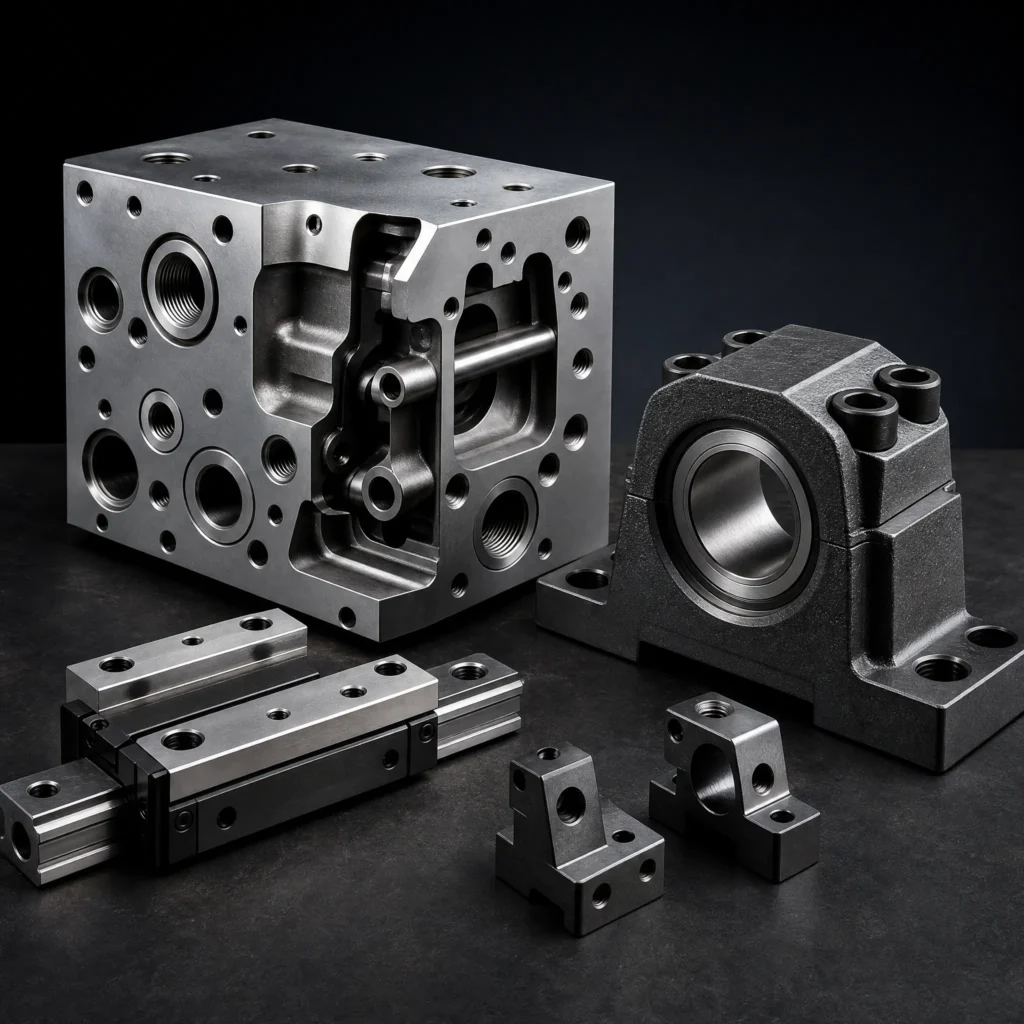
Case 01 | Hydraulic Proportional Servo Valve Body (High-Pressure Manifold Block)Multi-Angle Visual Gallery
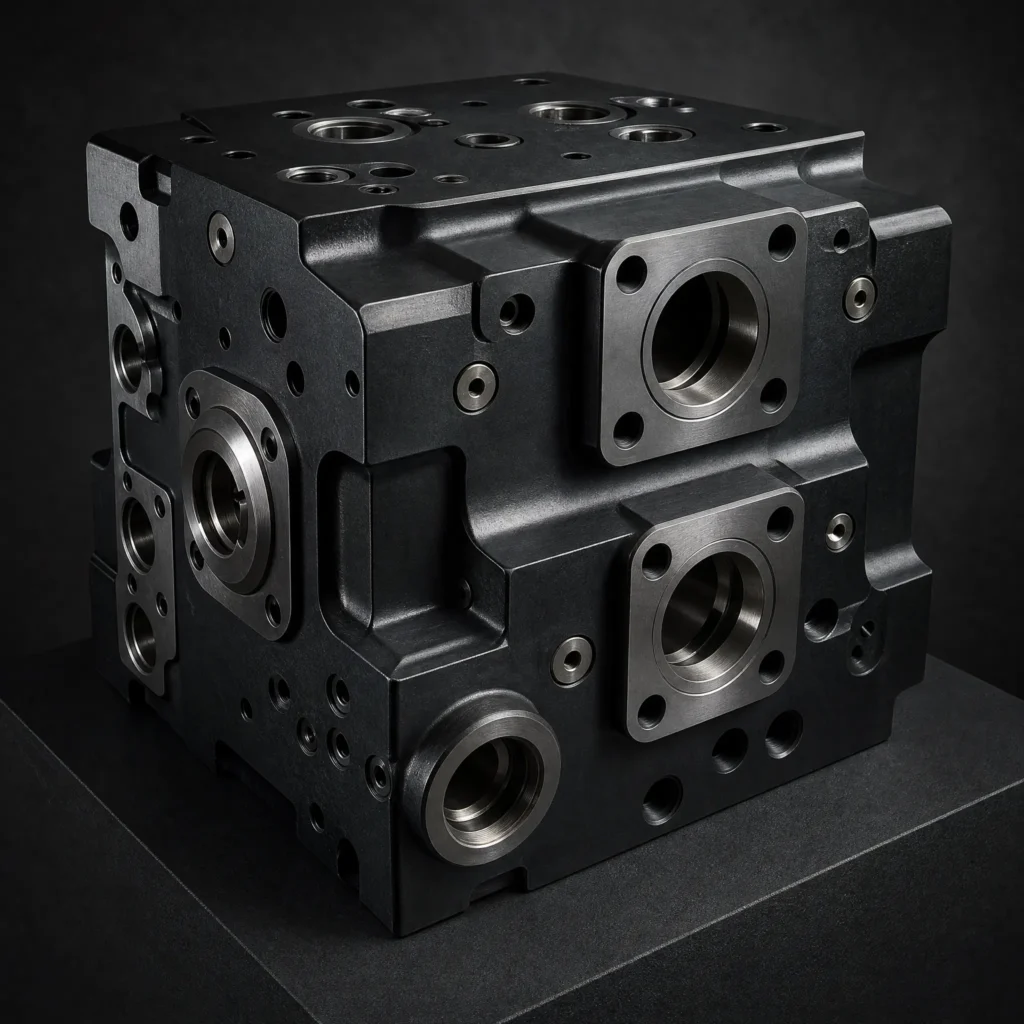
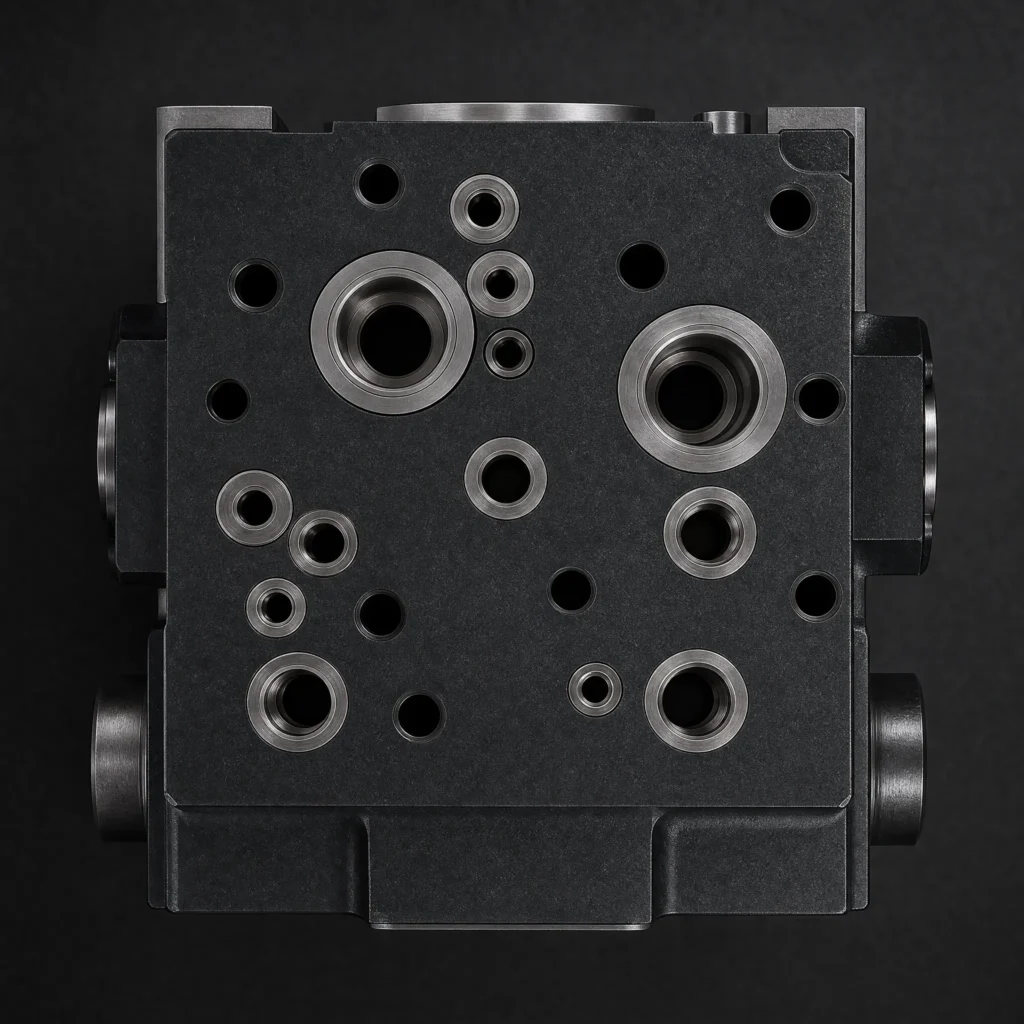
1. Manufacturing Process & Material Selection
- Core Process: Heavy-Duty 5-Axis Horizontal Machining Center (HMC) + Deep-Hole Cross-Drilling + Multi-Spindle Diamond Honing + Thermal Deburring (TEM) + High-Pressure Alkaline Washing & Black Oxide (MIL-DTL-13924).
- Material Grade: Forged Chromium-Molybdenum Alloy Steel 4140 (AISI 4140 / 42CrMo4, Q&T)
- Engineering Justification: High fatigue yield strength (≥750 MPa), high bulk modulus preventing bore expansion under 350 bar continuous hydraulic pulsating pressures.
- Tolerances & Cylindricity: Central valve spool bore roundness and cylindricity held within ≤0.0015mm(1.5μm); spool bore clearance fit 3–5μm; subplate face flatness ≤0.008mm.
2. Structural Features & Manufacturing Challenges
- Sub-Micron Spool Bore Honing & Port Micro-Notches:
- Challenge: Any taper or out-of-roundness in the spool bore causes internal hydraulic fluid bypass, pressure drop, or spool sticking under high-frequency servo cycling.
- Solution: Horizontal boring followed by computerized multi-pass diamond expansion honing with pneumatic in-process air-gauging feedback, achieving micro-inch cylindricity with crossed-hatch oil retention grooves (Ra 0.1 μm).
- Intersection Deburring of Internal Cross-Drilled Galleries:
- Challenge: Multiple internal cross-drilled pressure lines create unreachable burrs inside internal galleries that can dislodge and destroy hydraulic pumps.
- Solution: Thermal Energy Method (TEM) deflagration deburring completely vaporized internal burrs, followed by high-pressure fluid flushing at 400 bar.
3. Real-World Applications
- Heavy Industrial Injection Molding & Die-Casting Machines: Proportional servo valves regulating clamping force and high-speed injection cylinders.
- Mobile Hydraulic Excavators & Metallurgy Rolling Mills: Electro-hydraulic directional valves controlling heavy-payload proportional actuators under extreme shock pressures.
Case 02 | Rotary Table Indexing Spindle & Worm Gear Hub (High-Torque Drive Core)
Multi-Angle Visual Gallery
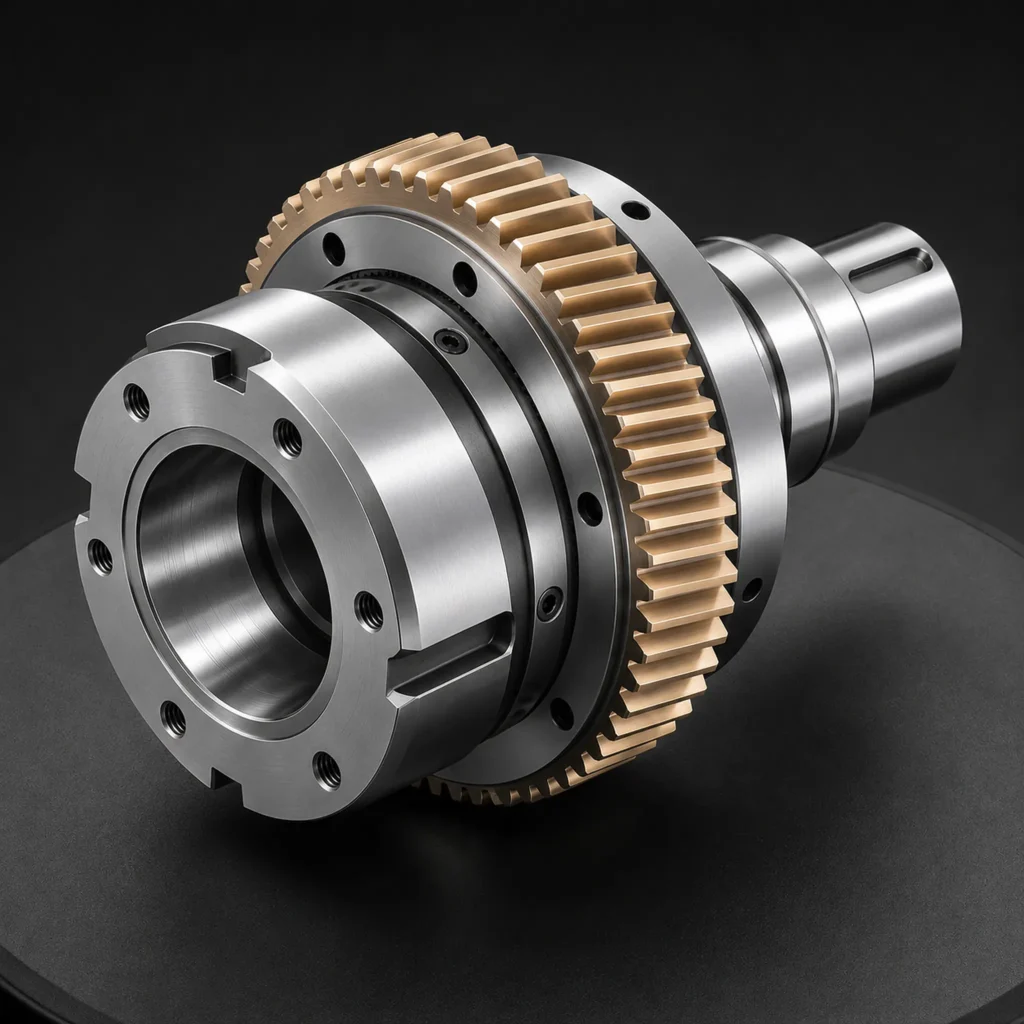
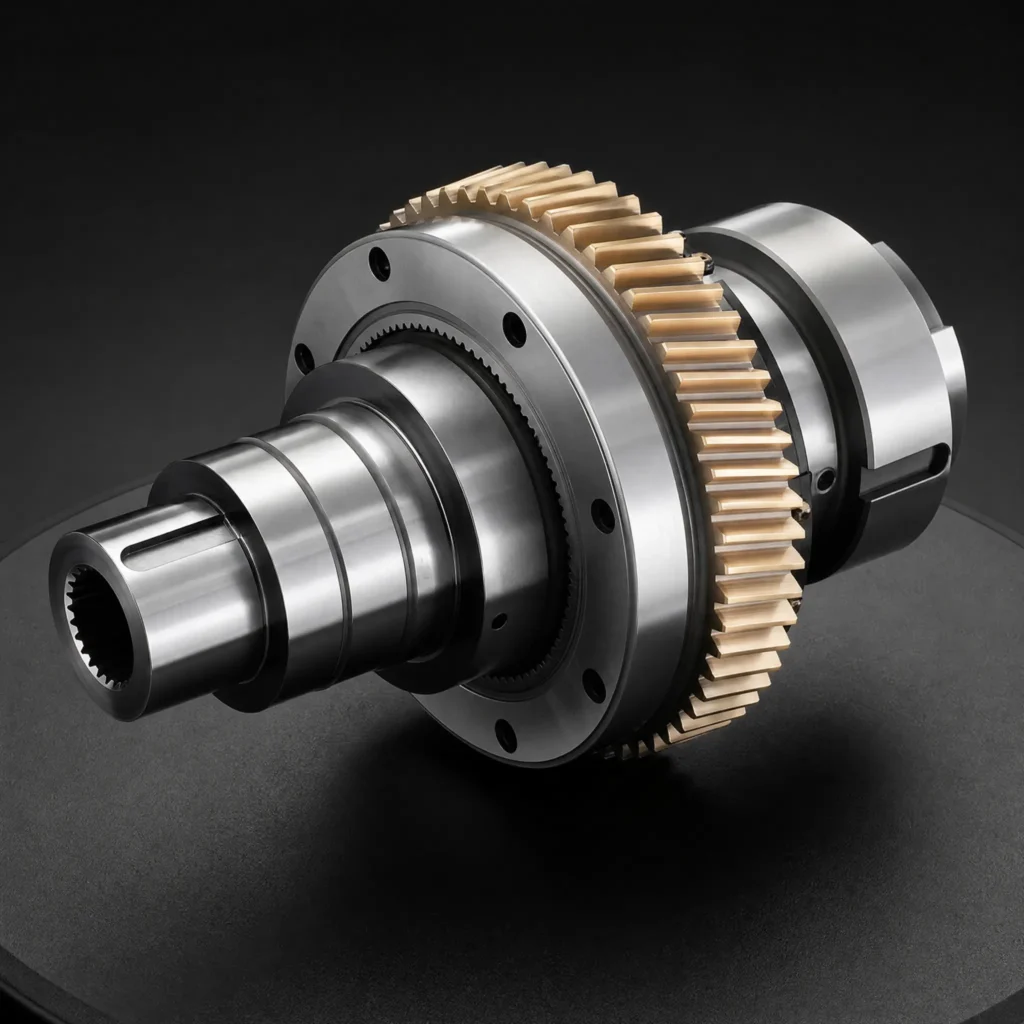
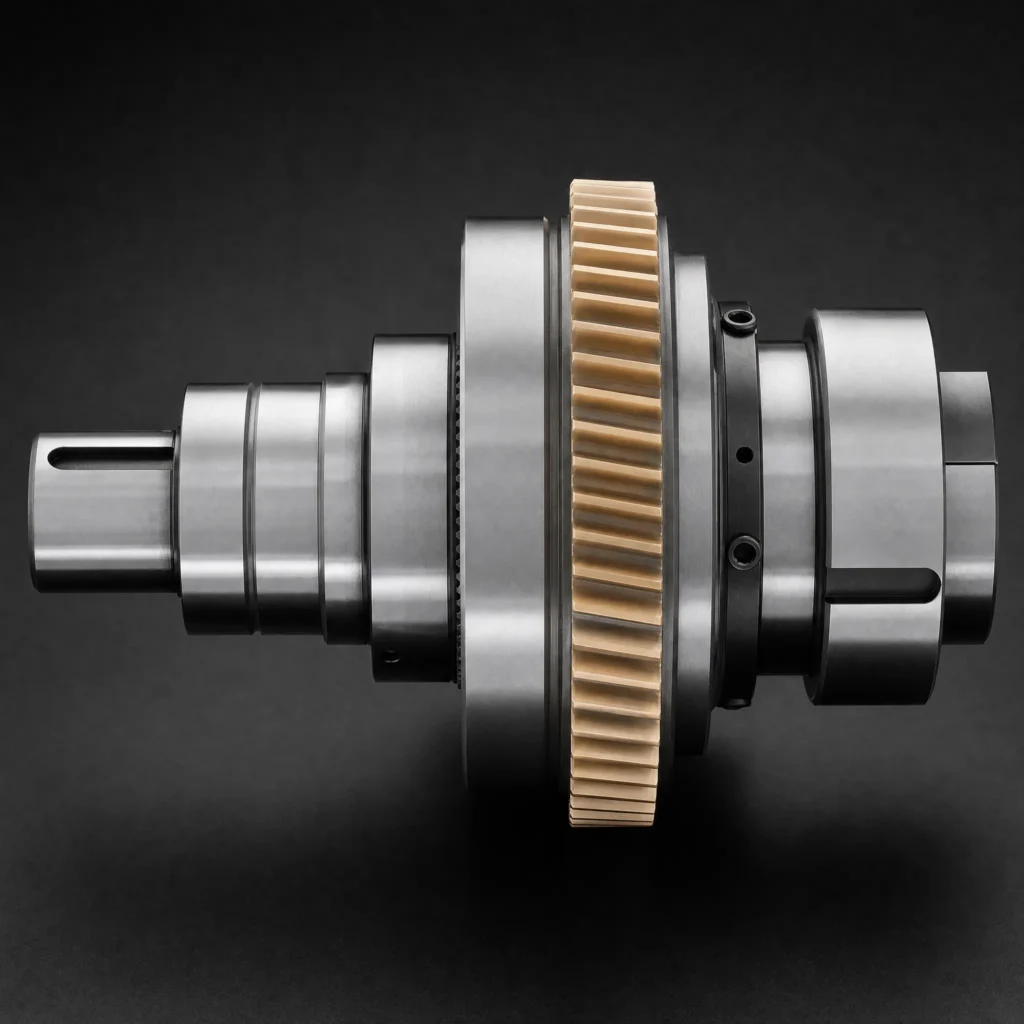
1. Manufacturing Process & Material Selection
- Core Process: Heavy CNC Turn-Mill Center + Induction Hardening (HRC 58–62 on journals) + Precision Gear Hobbing & Tooth Profile Grinding + CNC Cylindrical OD/ID Grinding.
- Material Grade: Forged Alloy Steel 42CrMo4 (Shaft Core) + Centrifugally Cast Phosphor Bronze CuSn12 (Gear Rim)
- Engineering Justification: Quenched and tempered alloy core delivers high torsional stiffness and shock resistance; phosphor bronze rim minimizes friction coefficient and eliminates gear galling.
- Tolerances & Accuracy: Spindle radial and axial runout ≤0.003mm; gear tooth profile pitch error compliance with DIN 3962 Class 4; ground bearing journal surface finish Ra 0.2μm.
2. Structural Features & Manufacturing Challenges
- Bi-Metallic Structural Integrity & Anti-Backlash Gear Tooth Form:
- Challenge: The high-torque worm wheel requires zero backlash over millions of indexing cycles while maintaining dimensional concentricity to the central spindle axis.
- Solution: Pre-stressed bi-metallic interference shrink-fitting combined with radial locking dowels. Gear teeth were ground on Reishauer gear grinders using dual-lead worm tooth geometry for in-field backlash micro-adjustment.
- Large Stepped Journal Coaxiality:
- Challenge: The spindle features multiple stepped bearing journals across 320 mm length, prone to runout errors across multiple turning setups.
- Solution: Finished all bearing diameters, internal Morse taper bore, and face shoulders between dead centers on a hydrostatic cylindrical grinding machine in a temperature-controlled cell (±0.5∘C).
3. Real-World Applications
- CNC 4th/5th Axis Rotary Tilting Tables: Indexing heavy aerospace workpieces with sub-arcsecond positioning repeatability.
- Precision Industrial Laser Cutting Rotational Chucks: Continuous hollow-spindle rotary indexing for tube and structural profile processing.
Case 03 | Heavy-Duty Pneumatic Gripper Body (Automation End-Effector Core)
Multi-Angle Visual Gallery
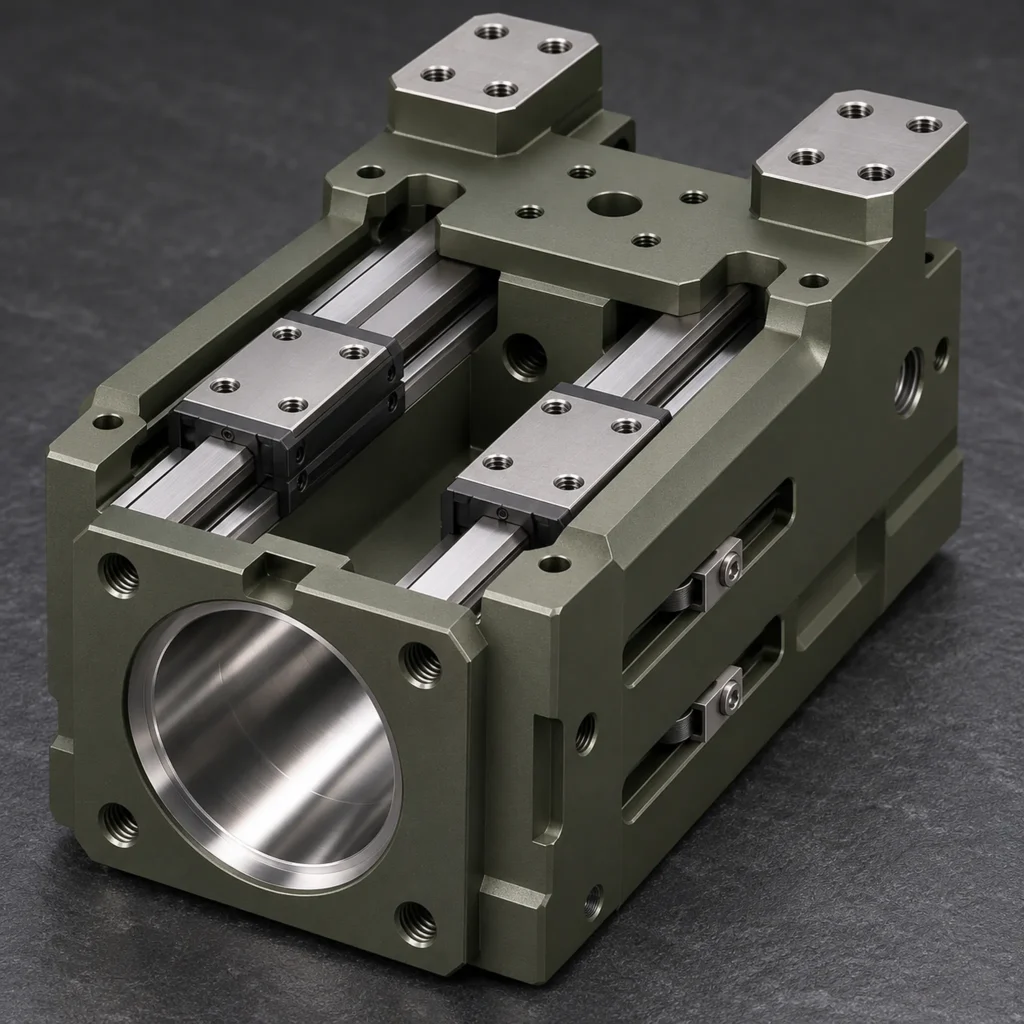
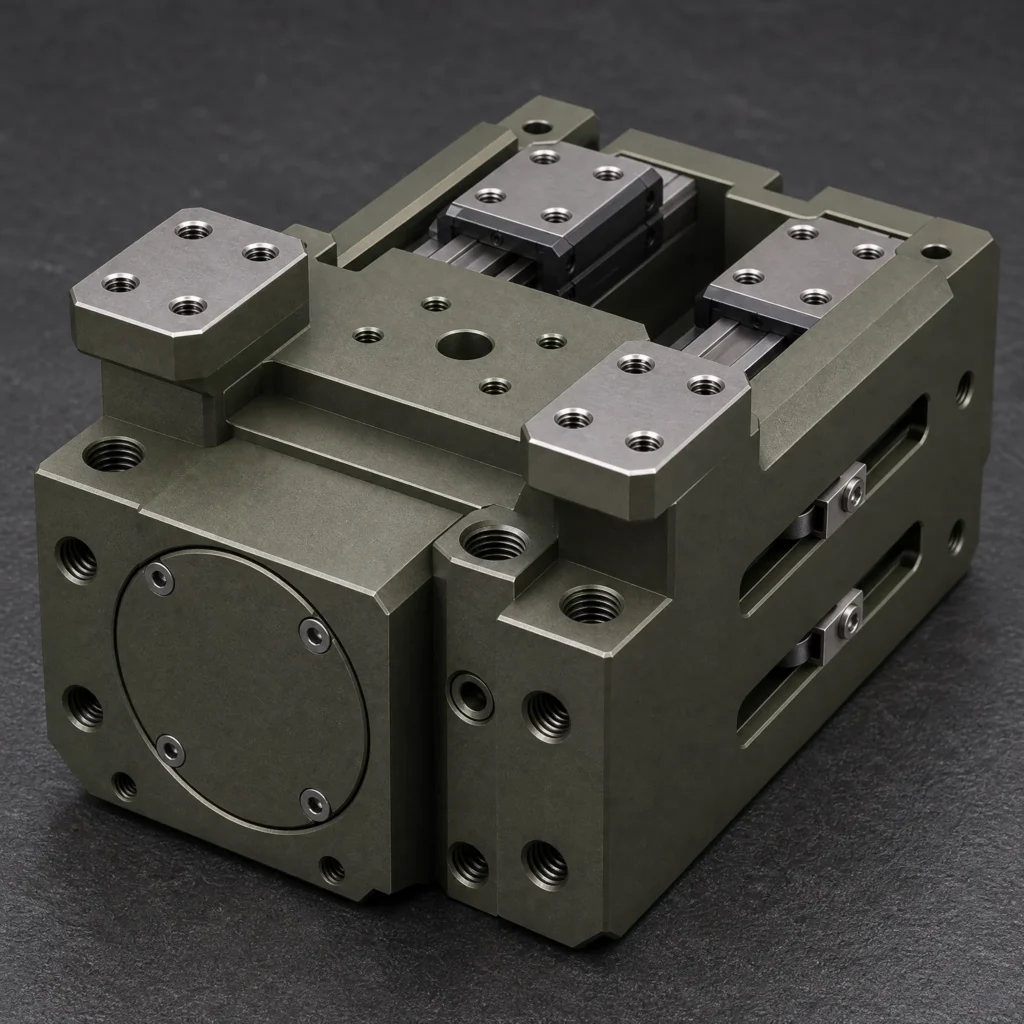
1. Manufacturing Process & Material Selection
- Core Process: 4-Axis High-Speed CNC Machining Center + Precision Diamond Roller Burnishing (Piston Bore) + Hard Anodizing with PTFE Impregnation (Type III Class 2,50μm thickness, HRC 60+ equivalent).
- Material Grade: Aerospace Aluminum Alloy 7075-T651
- Engineering Justification: Outstanding strength-to-weight ratio to maximize end-of-arm robot payload capacity, paired with PTFE-infused hard anodize for dry-lubricated high-speed cycling (>10 million cycles).
- Tolerances & Geometry: Dual guide rail parallelism ≤0.005mm across full jaw stroke; internal pneumatic cylinder bore roundness ≤0.004mm; bore roughness Ra 0.1 μm.
2. Structural Features & Manufacturing Challenges
- Dual Parallel Linear Slide Way Machining:
- Challenge: Jaw guide ways require strict parallelism and zero play under high off-center moment loads during rapid acceleration.
- Solution: Finish-milled both parallel guide tracks in a single continuous tool pass using custom matched form-cutters, guaranteeing uniform slide clearance.
- PTFE Hard Anodize Coating Dimensional Growth Control:
- Challenge: Hard anodizing produces a 50μm thick oxide layer with 50% penetration and 50% exterior growth, easily skewing critical bearing slide clearances.
- Solution: Pre-anodize CNC dimensions were precisely calibrated using CAM tool radius offsets (25 μm compensation per side), achieving perfect slip-fit tolerances post-coating.
3. Real-World Applications
- Automated Gantry Pick-and-Place Systems: Clamping heavy engine blocks, gear blanks, and sheet metal parts in automotive stamping lines.
- Cleanroom Semiconductor Wafer & Cassette Transfer Robots: Low-friction, non-shedding pneumatic gripping in cleanroom material handling.