BoValley bridges the gap between agile medical R&D prototyping and scalable, regulated contract manufacturing. Combining multi-axis micro-CNC milling, single-point diamond turning, optical-grade diffusion bonding, and cleanroom injection molding, we empower medical OEMs, medtech startups, and surgical robotics innovators to accelerate clinical validation and bring life-saving technologies to global markets faster.
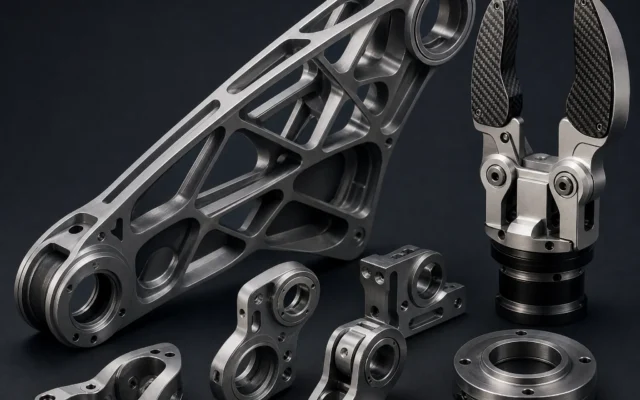
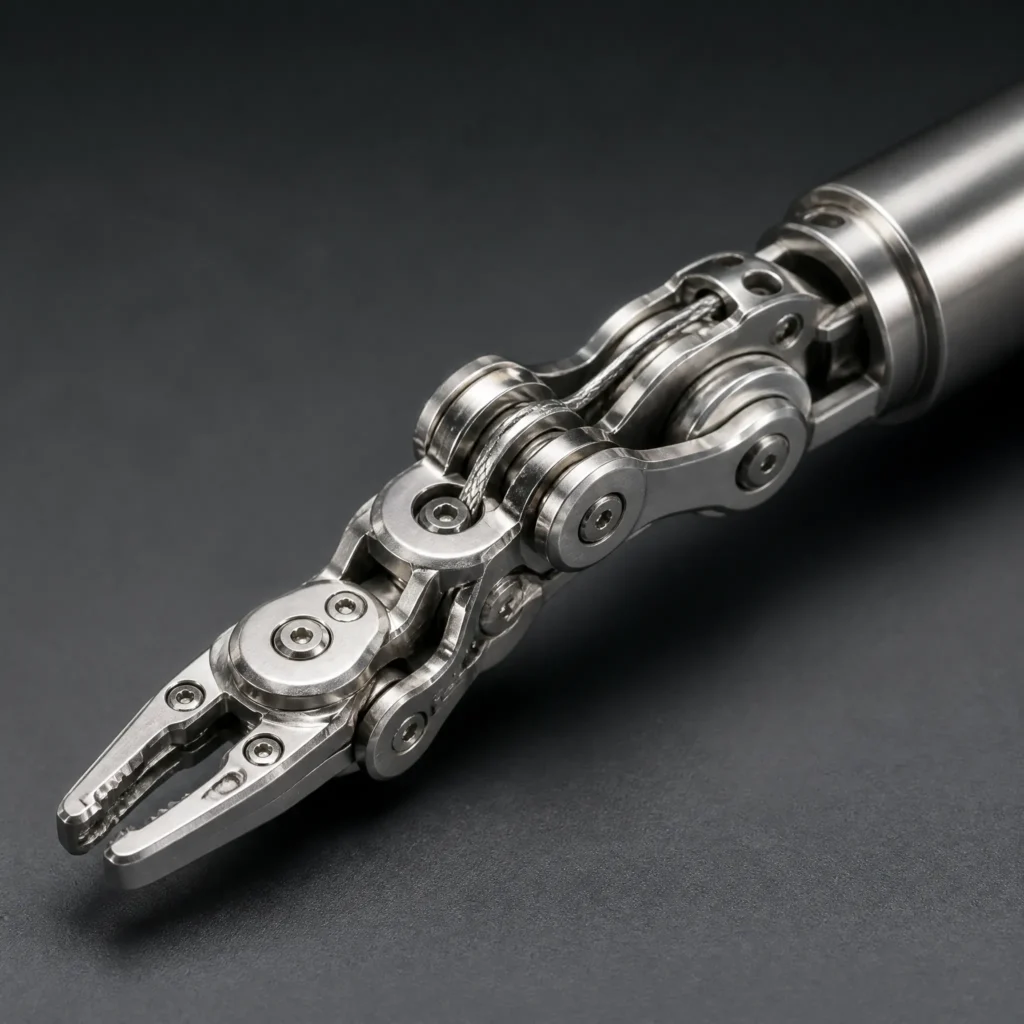
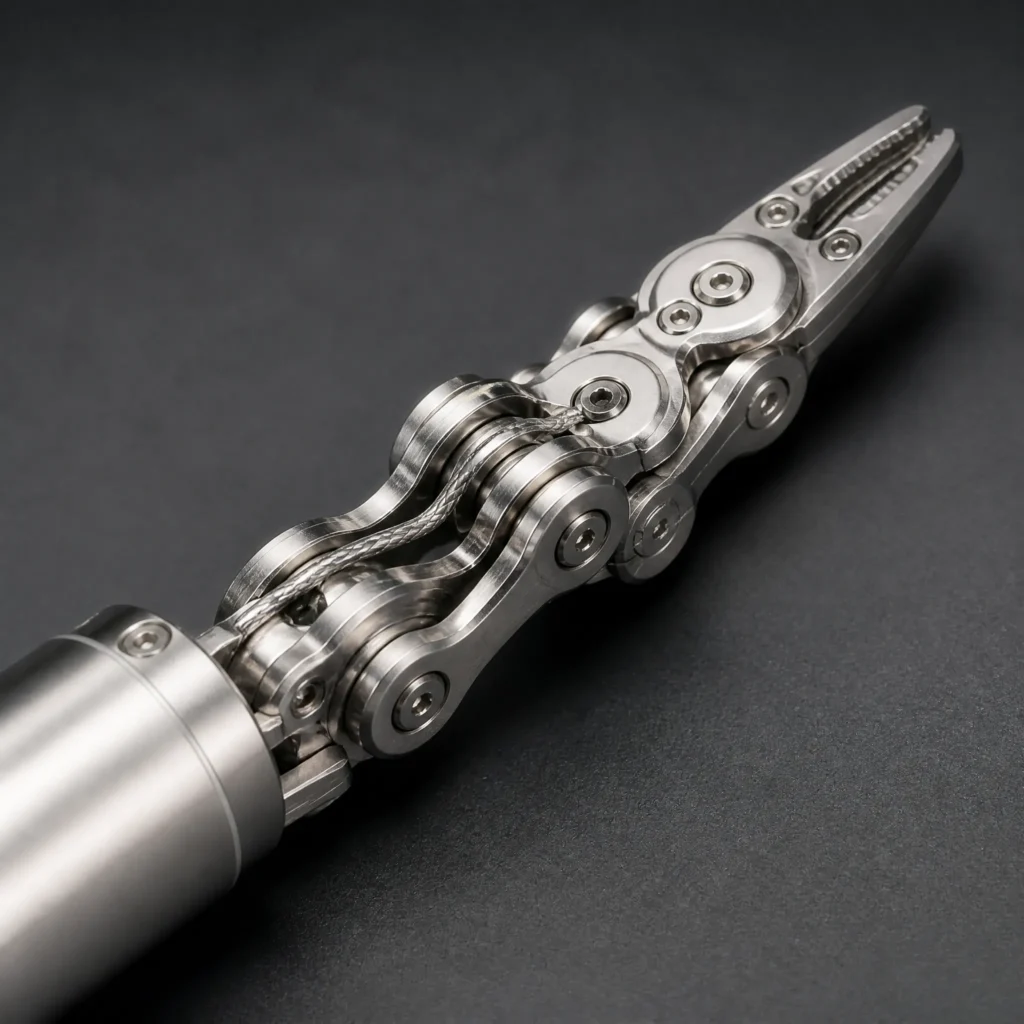
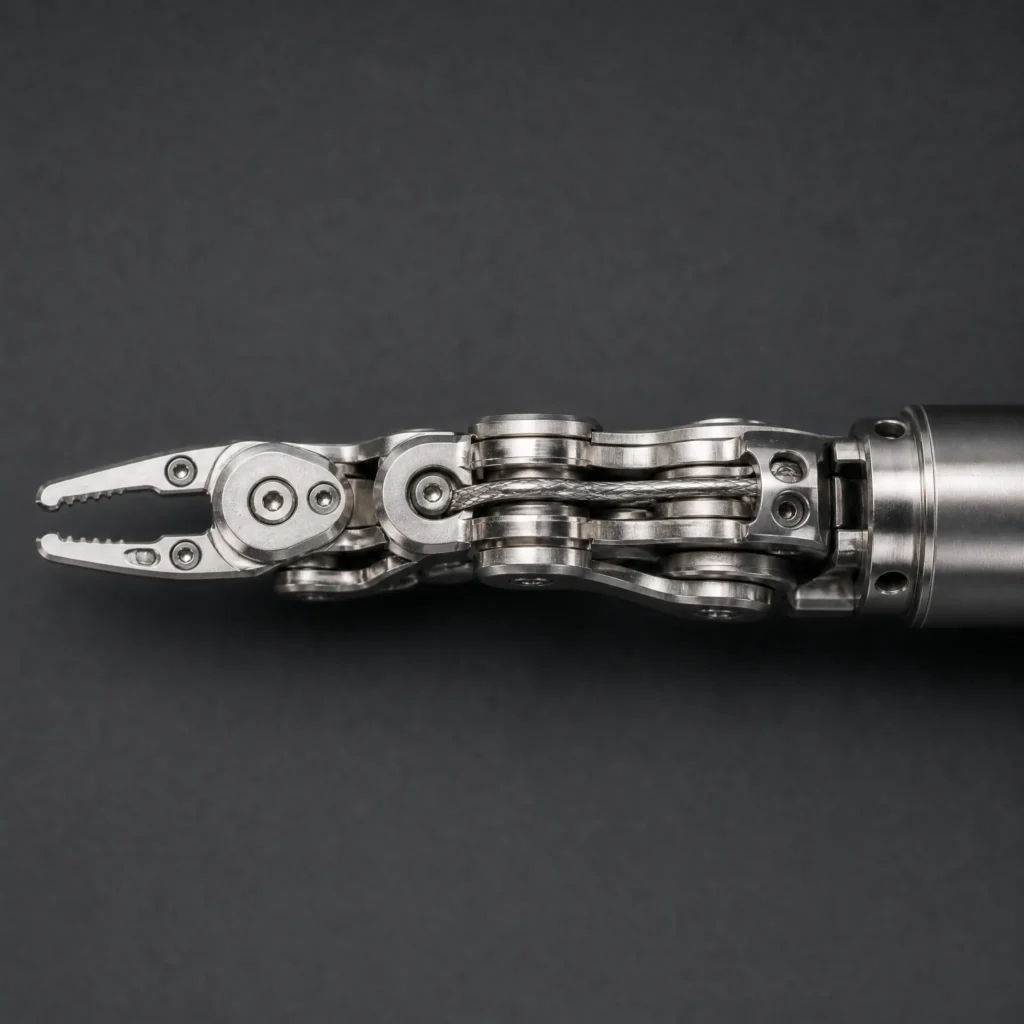
Case 01 | Surgical Robot Articulated Wrist (Multi-DOF Micro End-Effector)
Multi-Angle Visual Gallery
1. Manufacturing Process & Material Selection
- Core Process: 5-Axis Micro-CNC Milling (High-frequency 50,000 RPM Spindle) + Micro-Wire EDM (0.03mm wire) + Micro-Abrasive Deburring + Cleanroom Electropolishing & ASTM A967 Citric Passivation.
- Material Grade: Precipitation-Hardening Stainless Steel 17-4PH (Condition H900) / Medical 316LVM
- Engineering Justification: Ultra-high yield strength (≥1170 MPa), high fracture toughness against cyclic bending loads, and proven biocompatibility (ISO 10993) resistant to harsh hospital autoclave cycles.
- Tolerances & Precision: Micro pivot pin hole diameter held to +0.003/−0.000mm; wire cable guide groove radius R 0.20±0.005 mm; surface roughness Ra 0.2μm.
2. Structural Features & Manufacturing Challenges
- Sub-Millimeter Complex Serpentine Undercuts:
- Challenge: The entire micro-wrist measures under 12 mm in total length, with micro-cable guides thinner than 0.3 mm. Tool deflection and micro-burrs will fray driving cables during laparoscopic procedures.
- Solution: Utilized micro-grain diamond-coated ball end-mills with high-pressure oil mist lubrication, finishing micro-slits with oil-dielectric micro-wire EDM to prevent thermal recast burrs.
- Micro-Deburring & Passivation in Deep Bores:
- Challenge: Zero microscopic metal particles or free iron allowed inside blind cable tunnels.
- Solution: Automated chemical-mechanical flow deburring followed by 5-stage ultrasonic vacuum cleaning and citric acid passivation, inspected under 50× optical microscope.
3. Real-World Applications
- Robotic Laparoscopic & Endoscopic Surgery Systems: Serving as the multi-axis articulating wrist of robotic surgical forceps, needle drivers, and cautery scalpels.
- Minimally Invasive Ophthalmic & Neuro-Surgical Micro-Instruments: Executing sub-millimeter tissue manipulation with zero mechanical backlash.
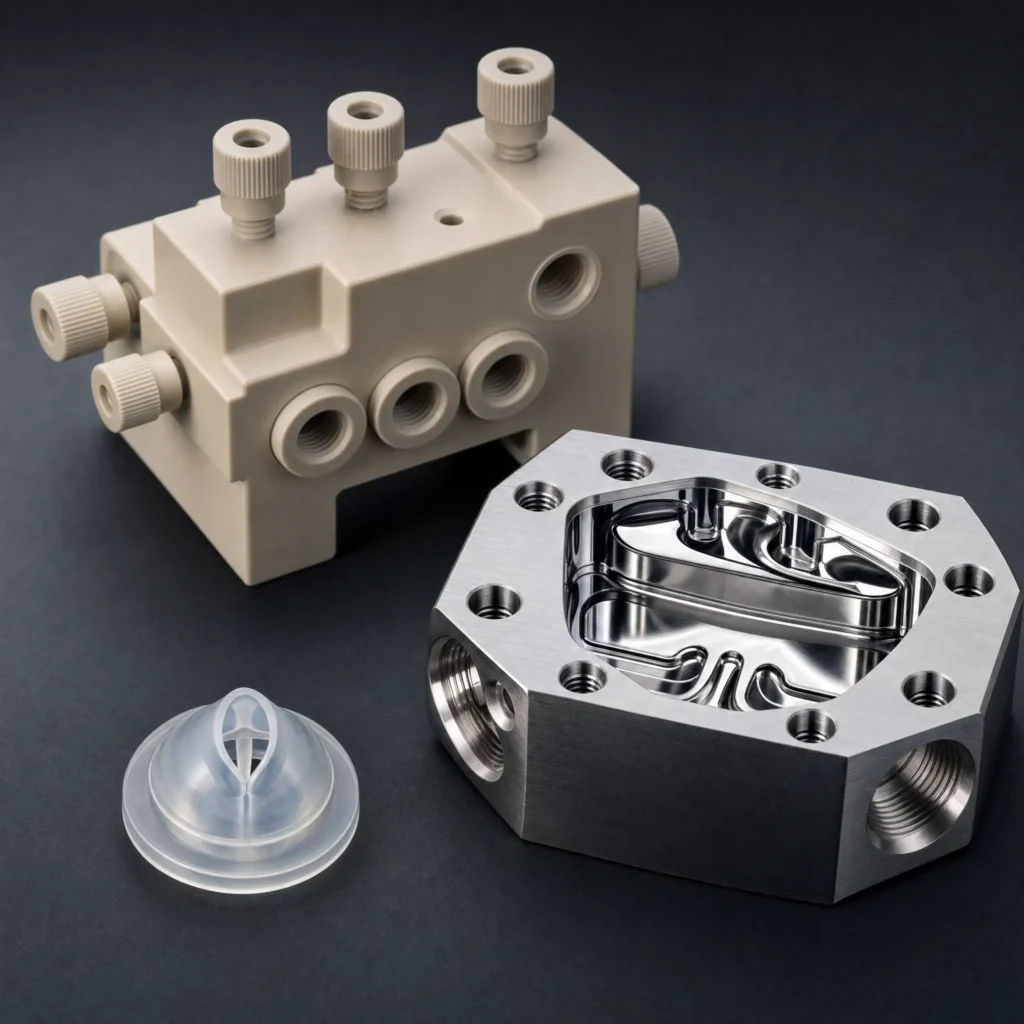
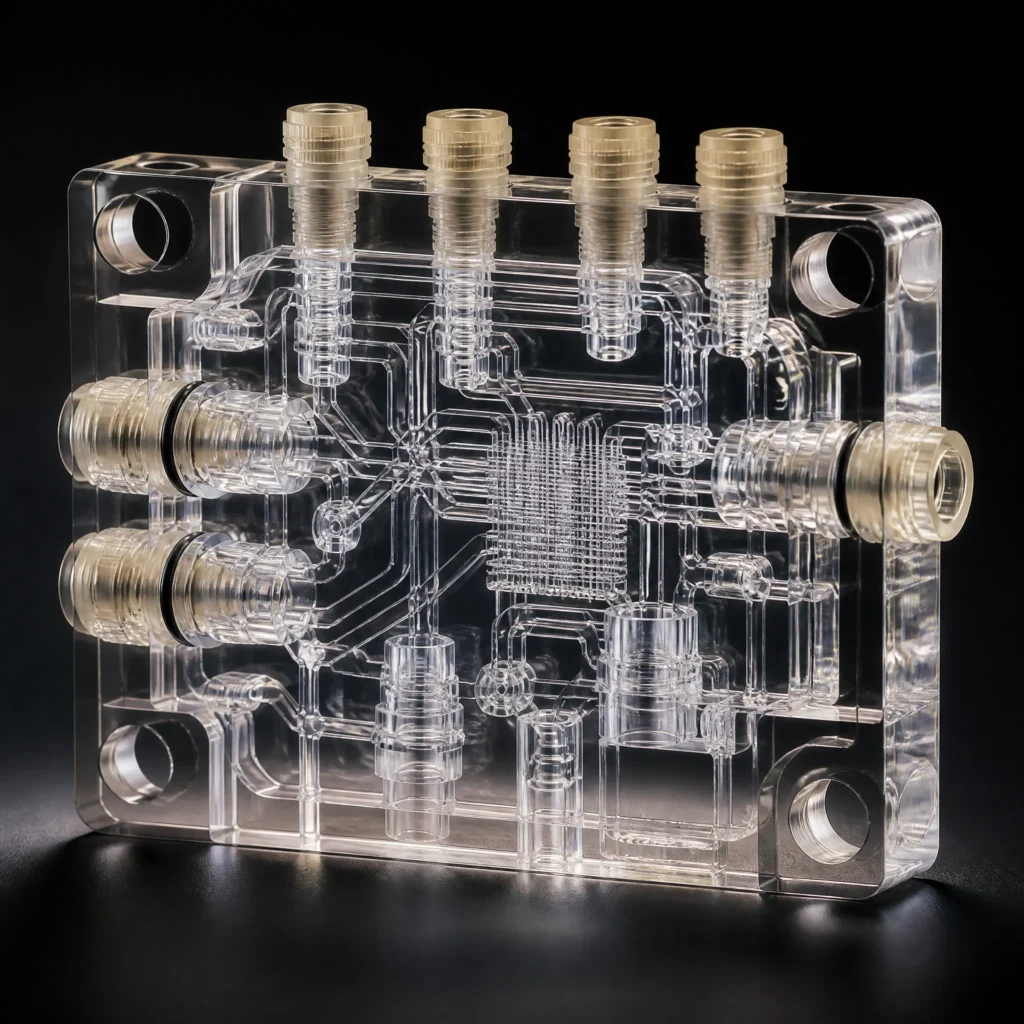
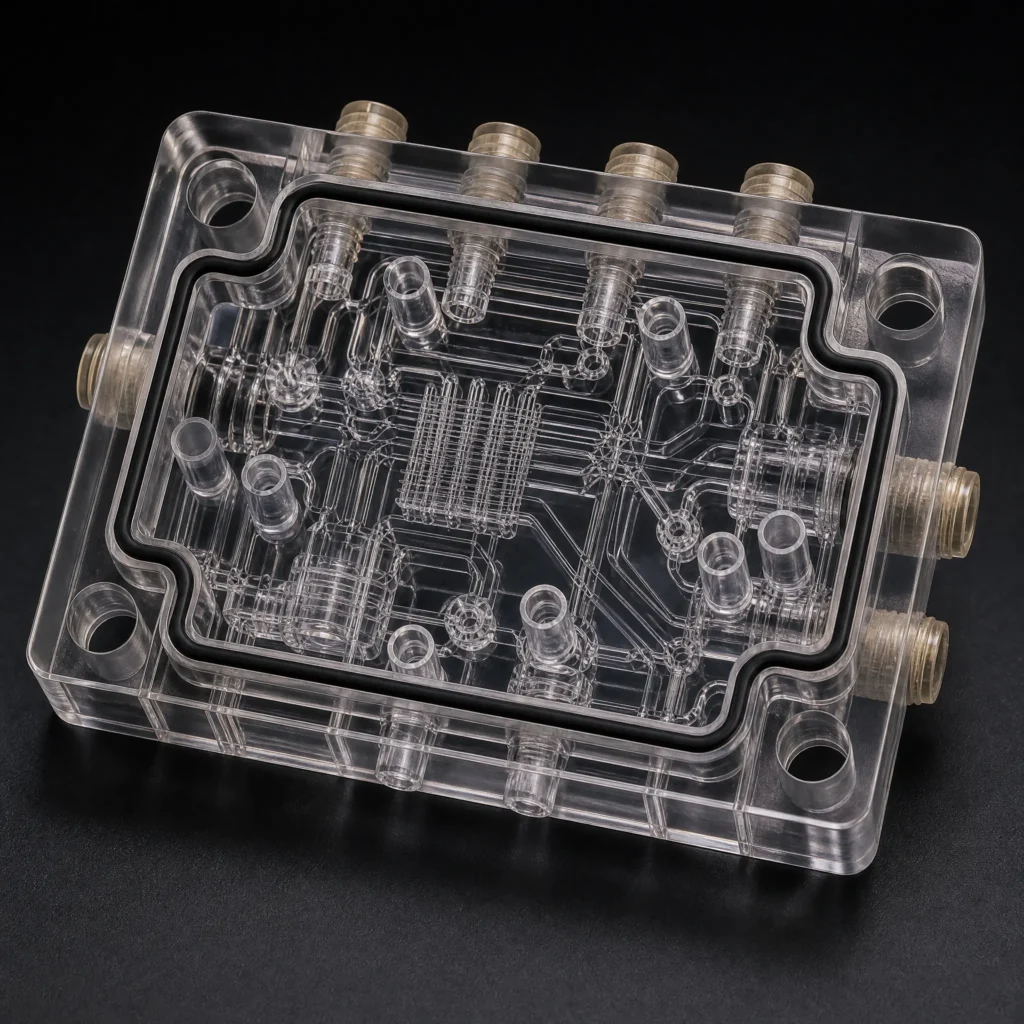
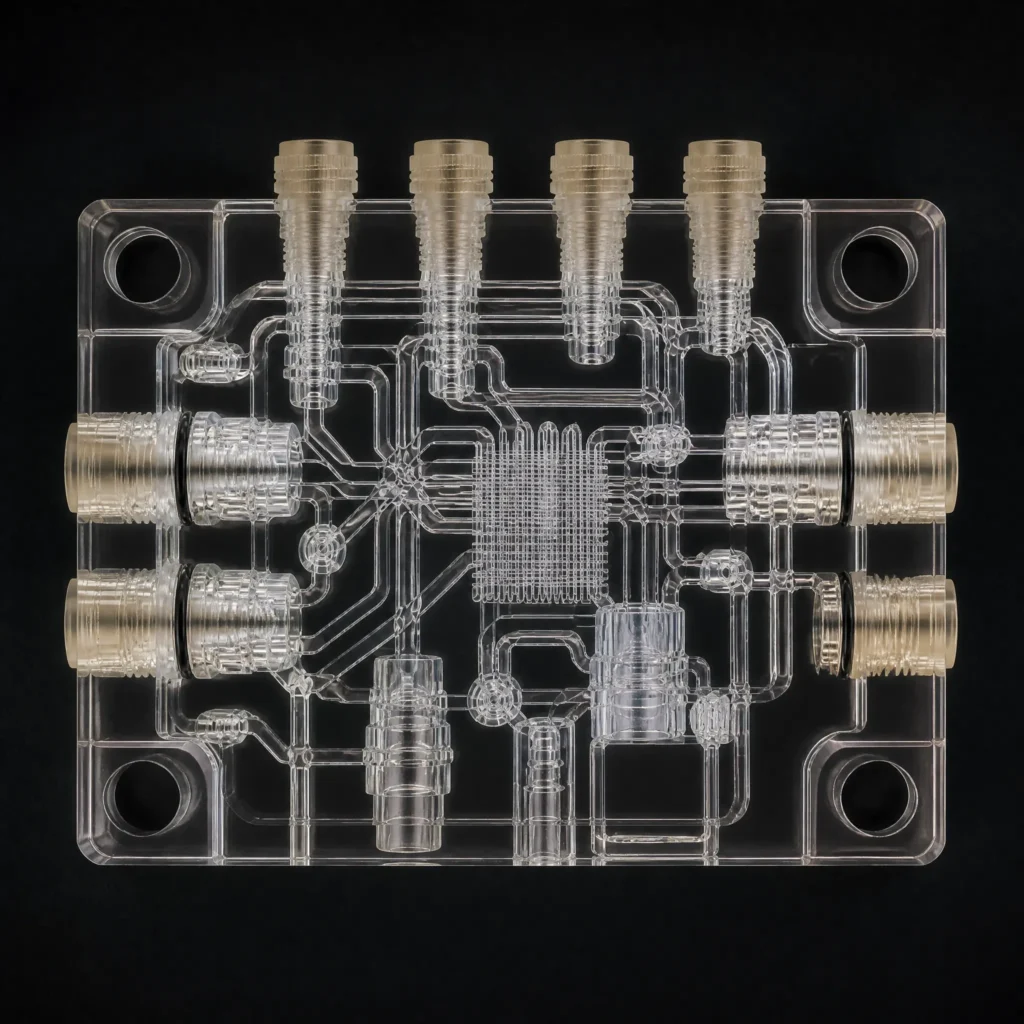
Case 02 | In-Vitro Diagnostic (IVD) Microfluidic Manifold Block
Multi-Angle Visual Gallery
1. Manufacturing Process & Material Selection
- Core Process: High-Speed Precision CNC Diamond Milling + Monolithic Diffusion Bonding / Solvent Fusion + Controlled Vapor Polishing + Leakage Mass Spectrometry Inspection.
- Material Grade: Medical-Grade Optical Polymethyl Methacrylate (PMMA) / Cyclic Olefin Copolymer (COC)
- Engineering Justification: 92% optical clarity, ultra-low auto-fluorescence background, superior chemical inertness against biochemical reagents and blood samples, and non-absorbing channel walls.
- Tolerances & Channel Geometry: Channel width and depth tolerance ±0.010 mm; internal channel wall surface roughness Ra≤0.05μm; hermetic burst pressure resistance ≥15 bar.
2. Structural Features & Manufacturing Challenges
- Optical Transparency & Internal Channel Polishing:
- Challenge: Traditional CNC milling leaves micro-milling tool marks that refract light, obscuring optical droplet detection and inducing fluidic micro-vortices.
- Solution: Single-point monocrystalline diamond tools produced mirror-like optical channel floors. Post-machining solvent vapor annealing restored molecular transparency across enclosed channels without dimensional swelling.
- Zero-Clogging Diffusion Bonding:
- Challenge: Multi-layer acrylic diffusion bonding risks thermal channel collapse or cross-channel leakage under sealing pressure.
- Solution: Vacuum thermal press bonding with sub-micron hydraulic force control and precise Tg temperature regulation, preserving microchannel cross-sectional fidelity.
3. Real-World Applications
- Automated Clinical Chemistry & Immunoassay Analyzers: Guiding and mixing multi-reagent assay streams without cross-contamination.
- Digital PCR & Point-of-Care Molecular Diagnostic Cartridges: Handling quantitative liquid dispensing and micro-bubble-free reagent distribution.
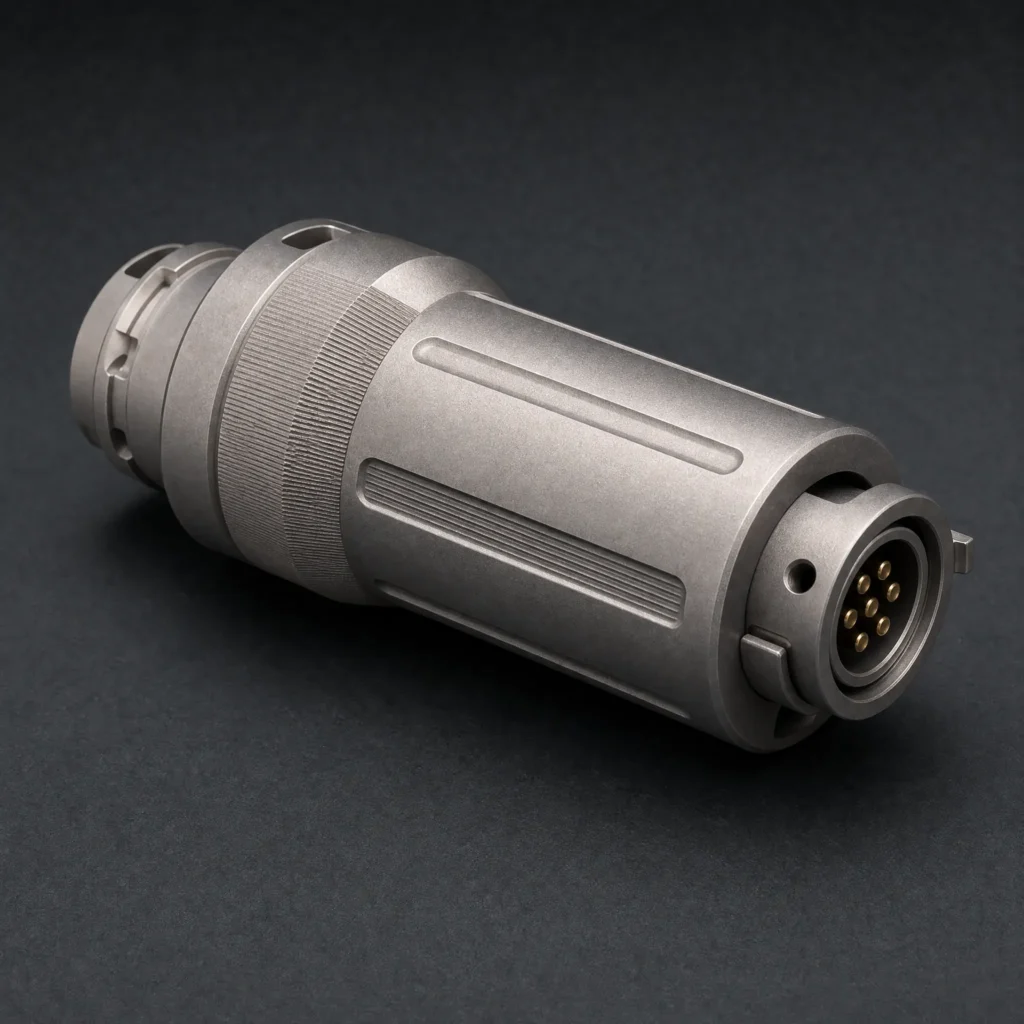
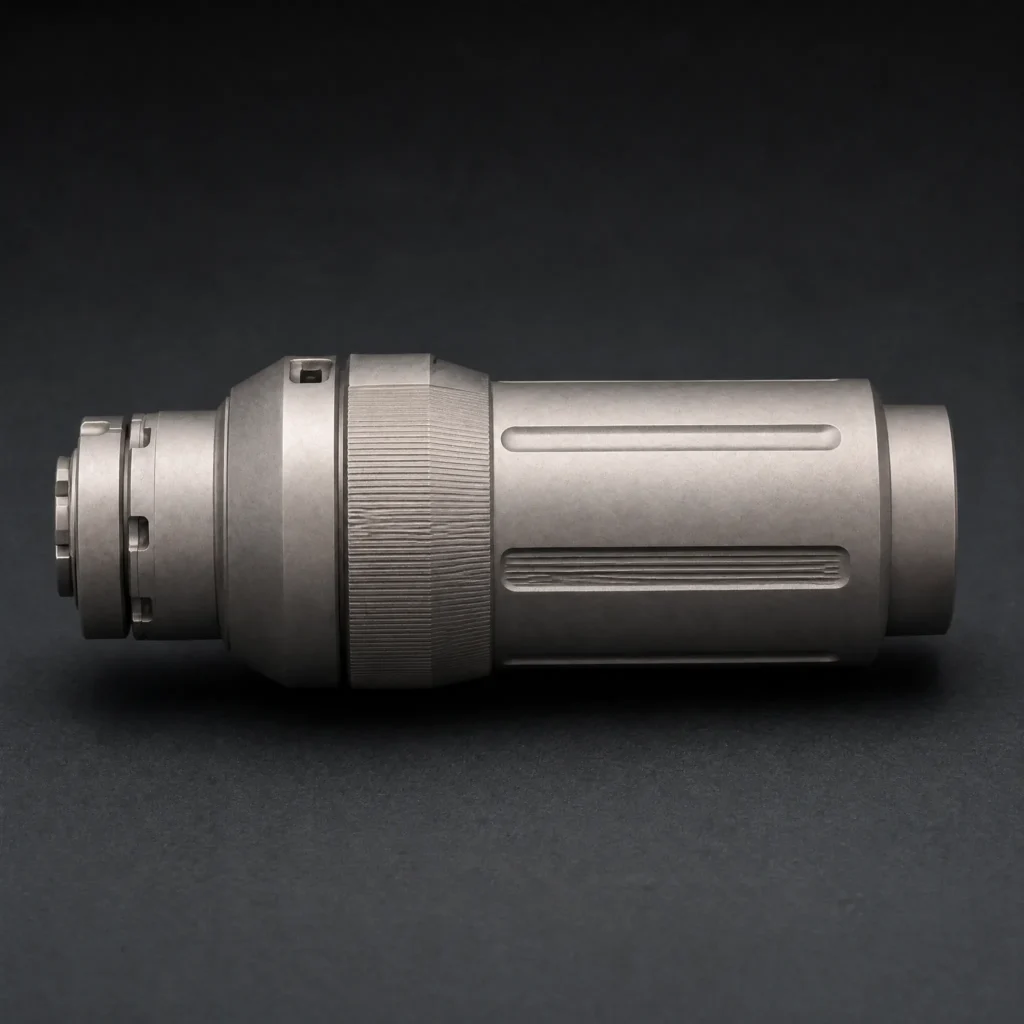
Case 03 | Orthopedic Surgical Drill Handpiece Housing (Medical Titanium Enclosure)
Multi-Angle Visual Gallery
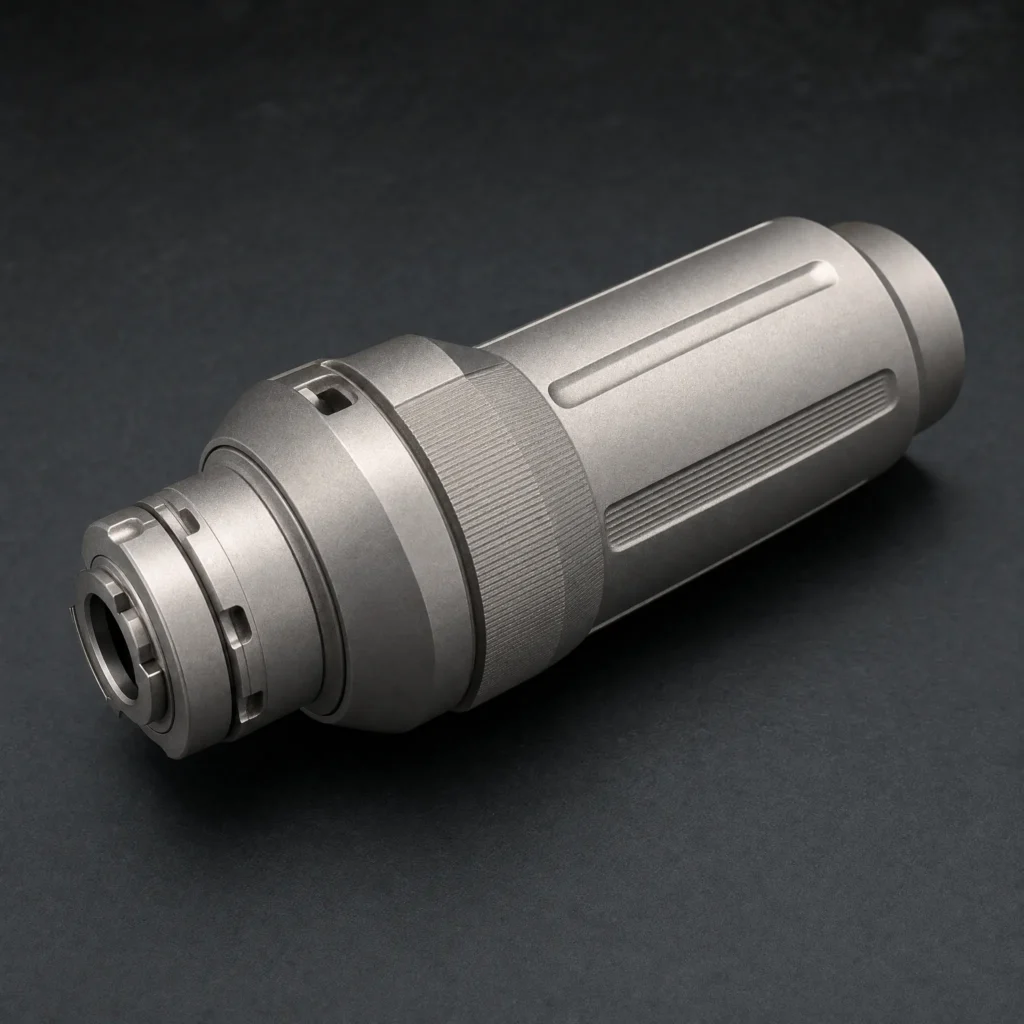
1. Manufacturing Process & Material Selection
- Core Process: Multi-Axis CNC Turn-Mill Compound Machining + Gun Drilling (Long Cannulated Bore) + 5-Axis Ergonomic Flute Milling + Ceramic Bead Blasting (180#) + Anodizing / Laser Serialization.
- Material Grade: Medical Titanium Alloy Ti-6Al-4V ELI (Grade 23 / ASTM F136)
- Engineering Justification: Extra-Low Interstitial (ELI) titanium guarantees highest fracture toughness, extreme corrosion resistance against blood/saline, and zero degradation under 134℃ steam autoclave sterilization.
- Tolerances & Runout: Deep cannulated center bore straightness ≤0.015 mm across 160 mm length; quick-release chuck pilot diameter held to ±0.006 mm; hermetic sealing lip runout ≤0.005 mm.
2. Structural Features & Manufacturing Challenges
- Deep Cannulated Concentric Bore Drilling:
- Challenge: Long length-to-diameter ratio (L/D>20) cannulated drive bore in titanium tends to drift off-center, causing dynamic rotational vibration at 100,000 RPM.
- Solution: High-pressure through-spindle coolant (100 bar) paired with customized carbide gun drills maintained central runout under 0.01 mm.
- Ergonomic Anti-Slip Knurling with Zero Biological Trapping:
- Challenge: Handpiece grip requires firm surgeon grip while preventing blood or tissue accumulation in sharp corners.
- Solution: 5-axis milled longitudinal scolloped flutes with continuous smooth transition radiuses (R 1.2 mm), eliminating sharp crevice zones for easy surgical decontamination.
3. Real-World Applications
- Orthopedic Trauma & Spine Surgical Power Tools: Housing high-speed brushless surgical drill motors and cannulated pin-driving gearboxes.
- Maxillofacial & ENT Surgical Micro-Saws: Providing balanced, ergonomic tactile control during delicate bone osteotomies.
See the processes, materials and inspection considerations for medical devices manufacturing at BoValley.