Engineering Excellence for Next-Generation Mobility
From multi-axis CNC machined lightweight structural components to precision injection-molded interior assemblies — BoValley delivers mission-critical automotive solutions meeting stringent IATF 16949 standards.
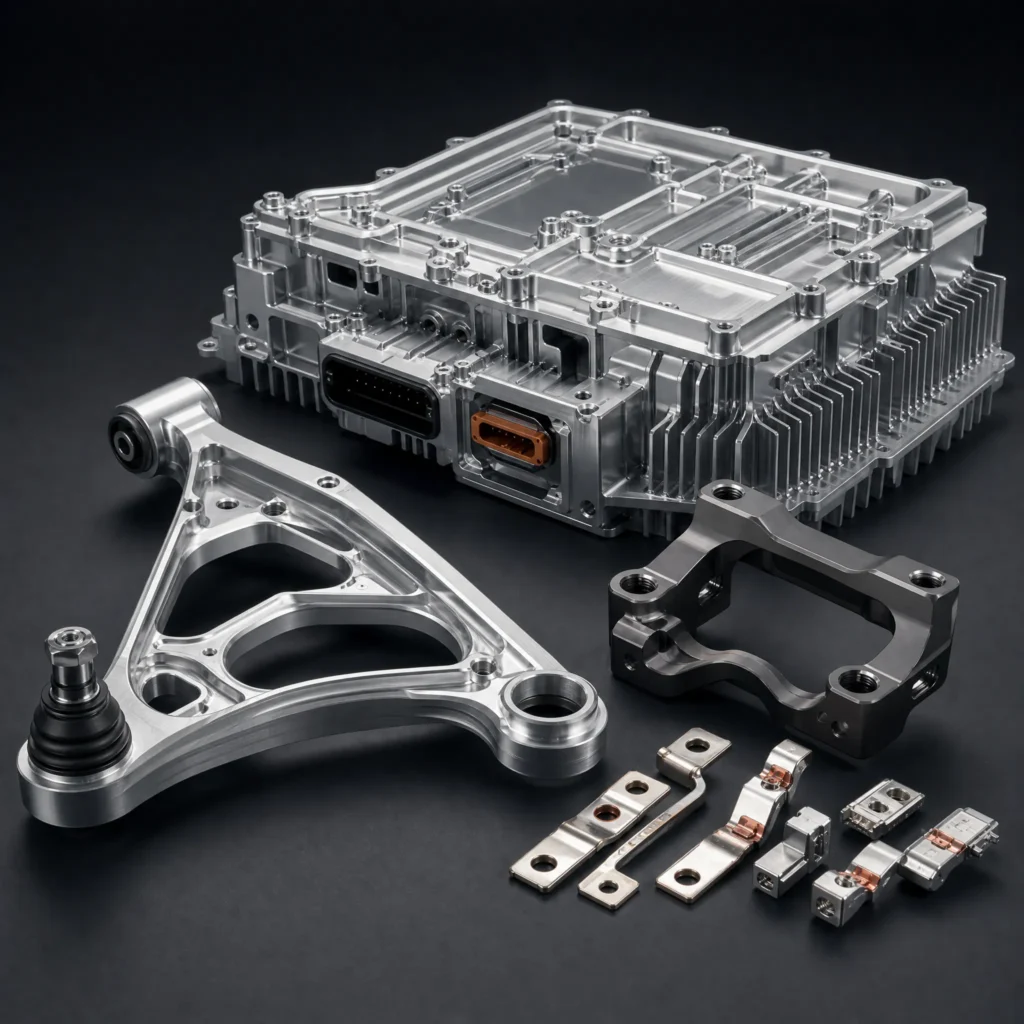
Case 01 | Automotive Aluminum Housing
Multi-Angle Visual Gallery

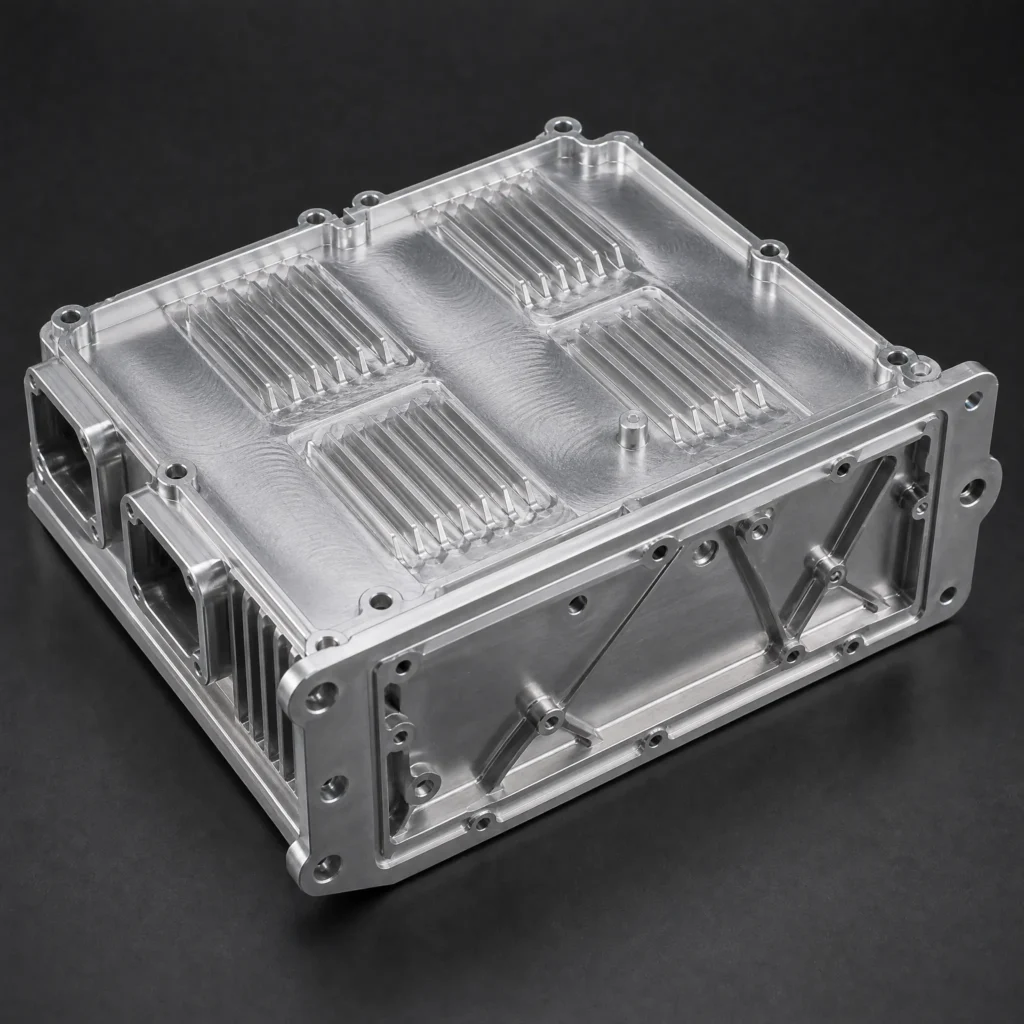
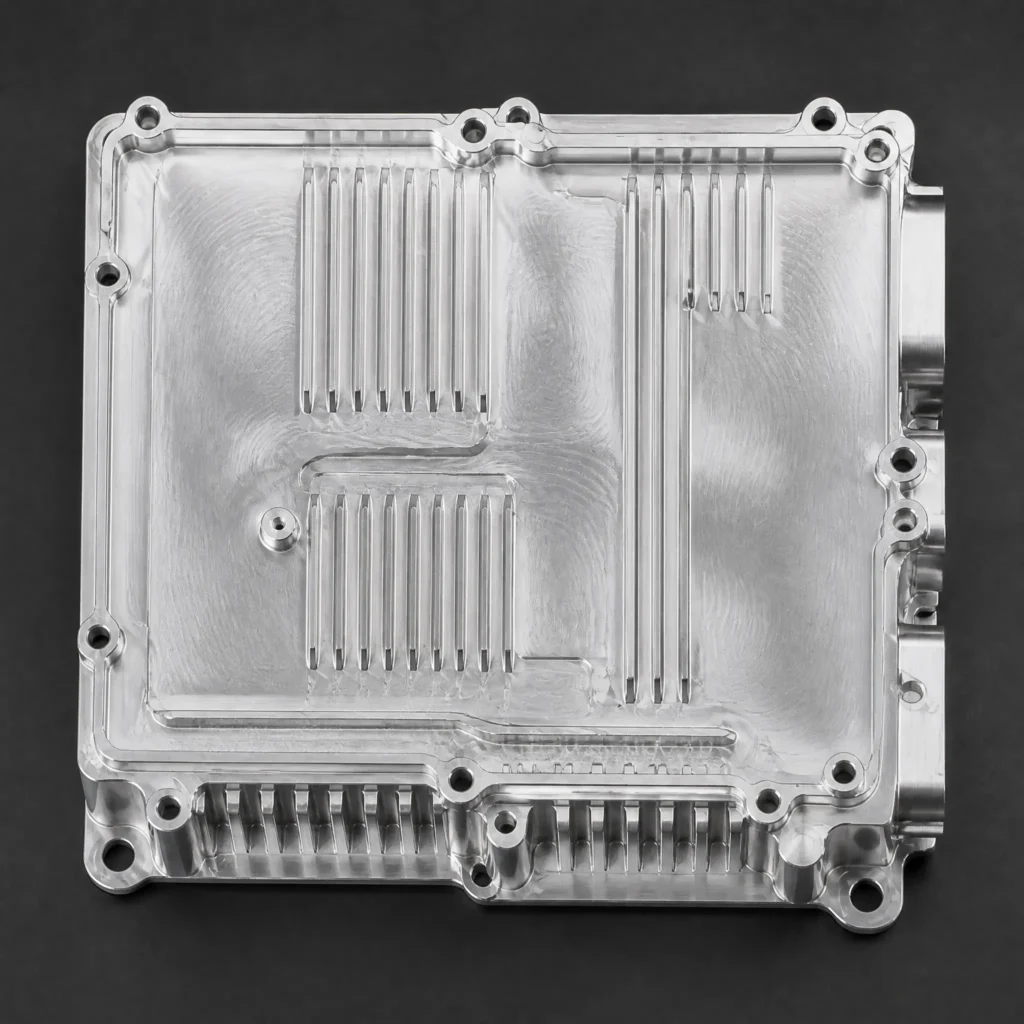
1. Manufacturing Process & Material Selection
- Core Process: 5-Axis Simultaneous CNC Milling (Single-setup multi-face machining) + High-Speed Trochoidal Roughing + Surface Bead Blasting (120#) + Clear Anodizing (Type II, MIL-A-8625).
- Material Grade: Forged Aluminum Alloy 6061-T6 / 6082-T6
- Engineering Justification: Excellent strength-to-weight ratio, superior thermal conductivity (≈167 W/(m⋅K)) for power electronics dissipation, and exceptional corrosion/vibration fatigue resistance.
- Tolerances & Surface Finish: Critical bearing and sensor bore concentricity ≤0.008 mm; O-ring sealing face flatness ≤0.015 mm; internal fluid/air channels machined to Ra 0.4 μm.
2. Structural Features & Manufacturing Challenges
- Complex Deep-Pocket Thin-Wall Architecture:
- Challenge: The internal cavity reaches a depth of 120 mm with a wall thickness of only 2.5 mm. Large-depth aggressive milling easily induces high-frequency resonance, causing tool chatter marks and micro-geometric deflection.
- Solution: Utilized balanced anti-vibration hydraulic toolholders combined with CAM-optimized trochoidal milling toolpaths to maintain consistent radial chip load. Final finishing applied multi-pass low-depth-of-cut passes to neutralize residual cutting stress.
- Hermetic O-Ring Sealing Perimeter:
- Challenge: Zero step marks or cutter transition lines allowed along the continuous perimeter groove to ensure IP67/IP68 ingress protection under thermal shock cycles.
- Solution: Customized circular profile end-mills ran a continuous uninterrupted spiral contour path, followed by 100% CMM coordinate scanning of the sealing surface profile.
3. Real-World Applications
- EV Traction Inverter & Motor Controller Housing (MCU Enclosure): Enclosing insulated-gate bipolar transistor (IGBT) power modules, providing electromagnetic shielding (EMI/EMC) and integrated cooling duct routing.
- Hybrid Transmission Electronic Control Unit (TCU): Operating reliably under extreme under-hood vibration loads and broad temperature swings (−40∘C to +125∘C).
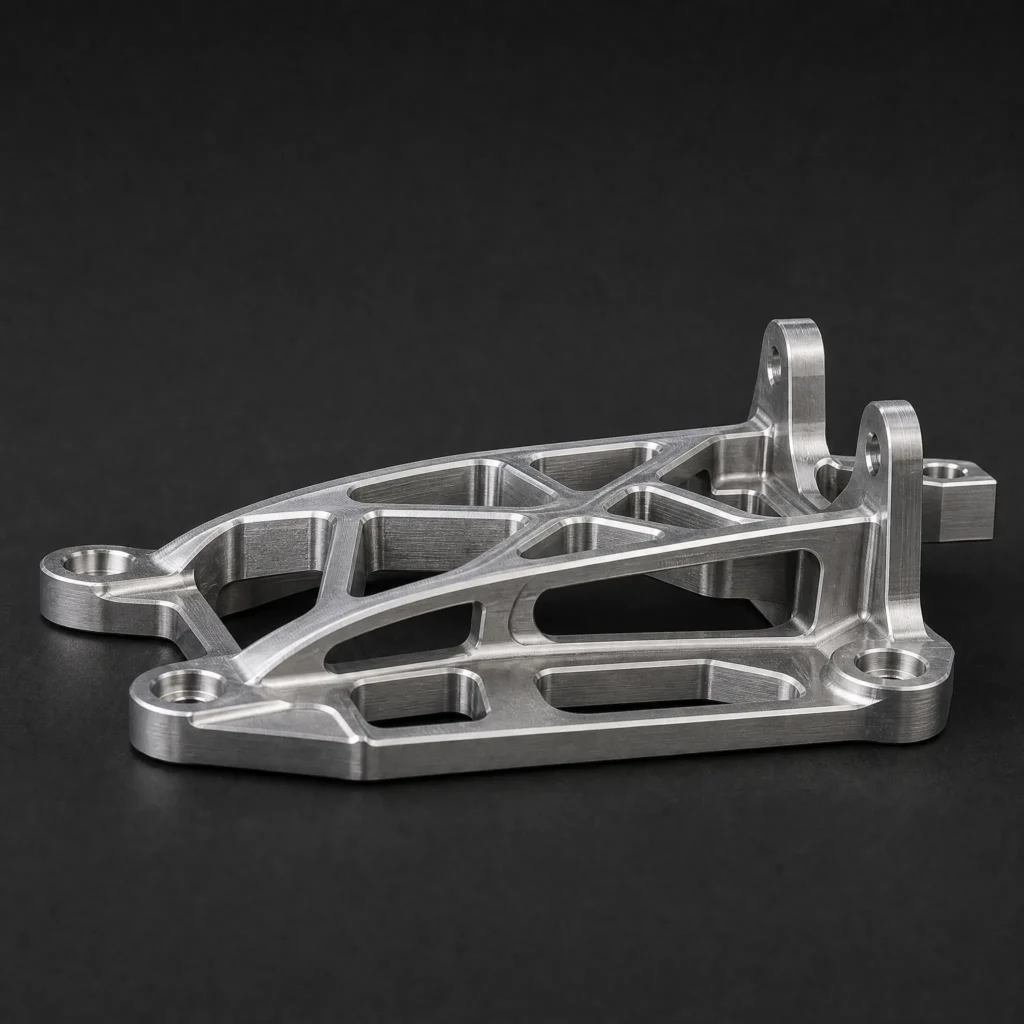
Case 02 | EV Battery Mounting Bracket
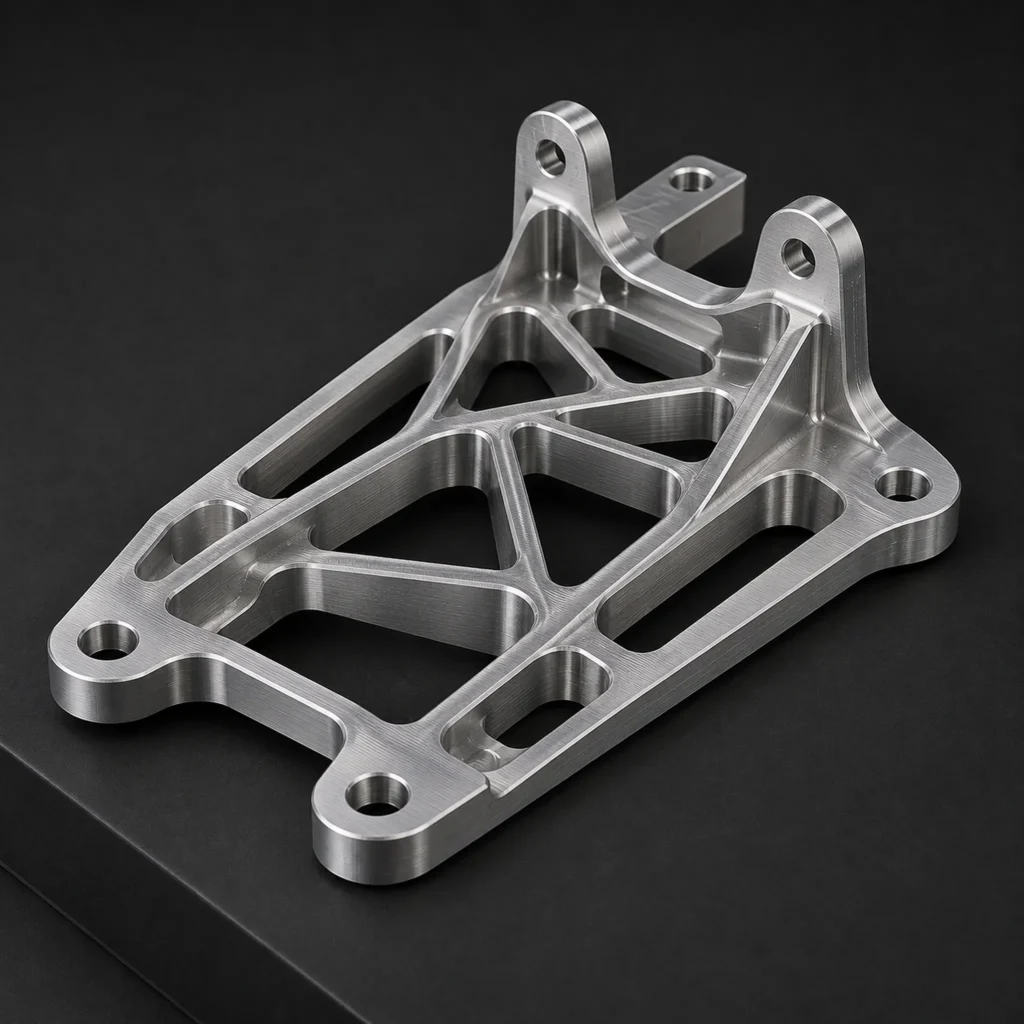
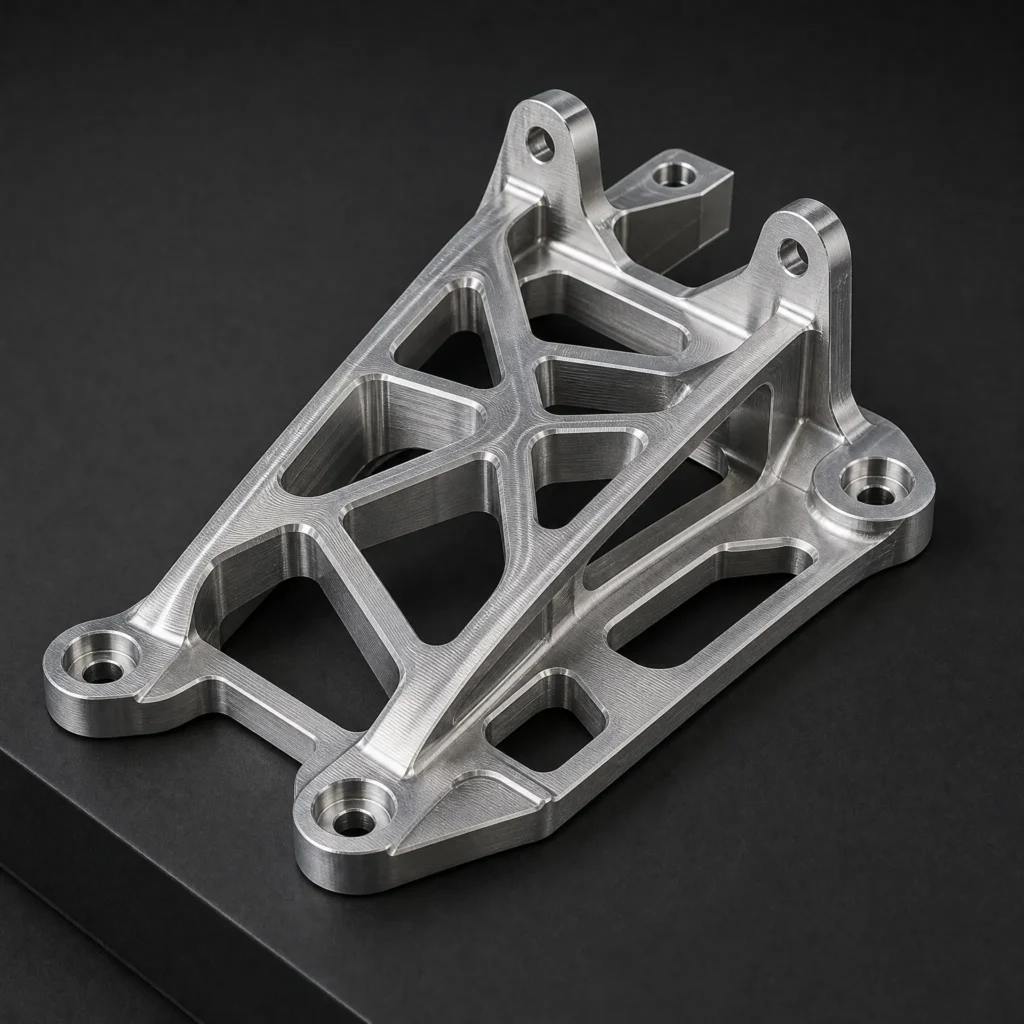
1. Manufacturing Process & Material Selection
- Core Process: Heavy-Duty CNC Vertical Machining Center (VMC) + Intermediate Artificial Stress-Relief Aging + 4-Axis High-Speed Finish Milling + Conductive Hard Anodizing (Type III, Black).
- Material Grade: Aviation-Grade High-Strength Aluminum Alloy 7075-T6
- Engineering Justification: Yield strength exceeds 500 MPa (rivaling high-strength structural steel at one-third the weight), specifically engineered to absorb crash impact energy and road shock loads.
- Tolerances & Dimensions: Planar flatness across a 450 mm span controlled within ≤0.02 mm; diagonal center-to-center hole spacing held to ±0.01 mm.
2. Structural Features & Manufacturing Challenges
- Large Material Removal Ratio & Warpage Control:
- Challenge: Material removal exceeds 78% from solid billet plate. Release of rolling internal stresses causes severe longitudinal bow and twist deformation.
- Solution: Implemented symmetrical rough-machining flipping sequences, followed by a thermal stress-relief tempering cycle. Final finishing utilized multi-point vacuum floating fixtures to ensure zero free-state clamping distortion.
- Fatigue Notch Sensitivity & Fillet Transitions:
- Challenge: Internal pocket bottom corners are subject to dynamic cyclic fatigue; any sharp tool radius or dwell mark risks micro-crack initiation during high-G vehicle impacts.
- Solution: 3D helical interpolation with micro-radius ball-end mills achieved seamless fillet transitions (Ra0.8μm), eliminating mechanical stress risers.
3. Real-World Applications
- EV Battery Pack Crossmember & Subframe Bracket: Mechanically anchoring the high-voltage battery enclosure to the body-in-white (BIW) architecture, providing side-impact collision protection.
- Electric Drive Unit (EDU) Shock Mount: Isolating high-frequency motor torque vibrations from the passenger cabin chassis.
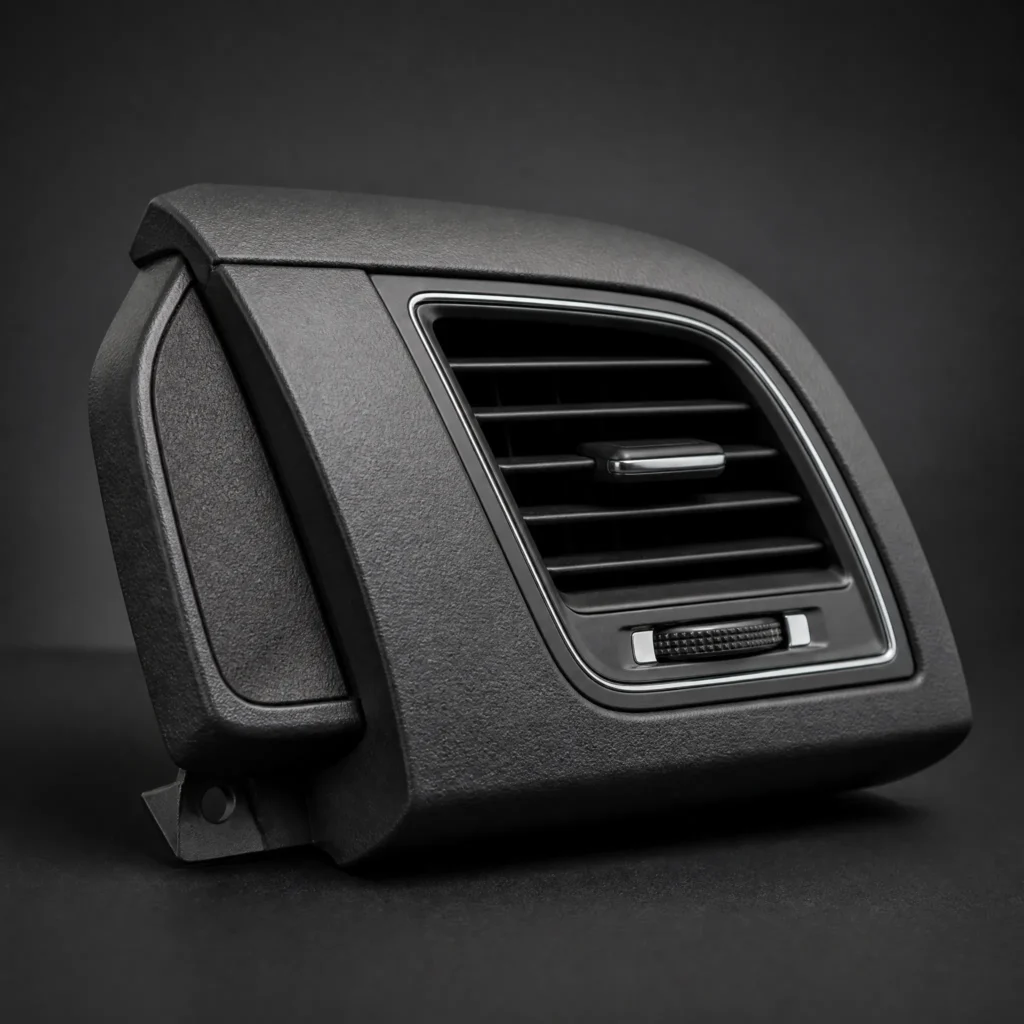
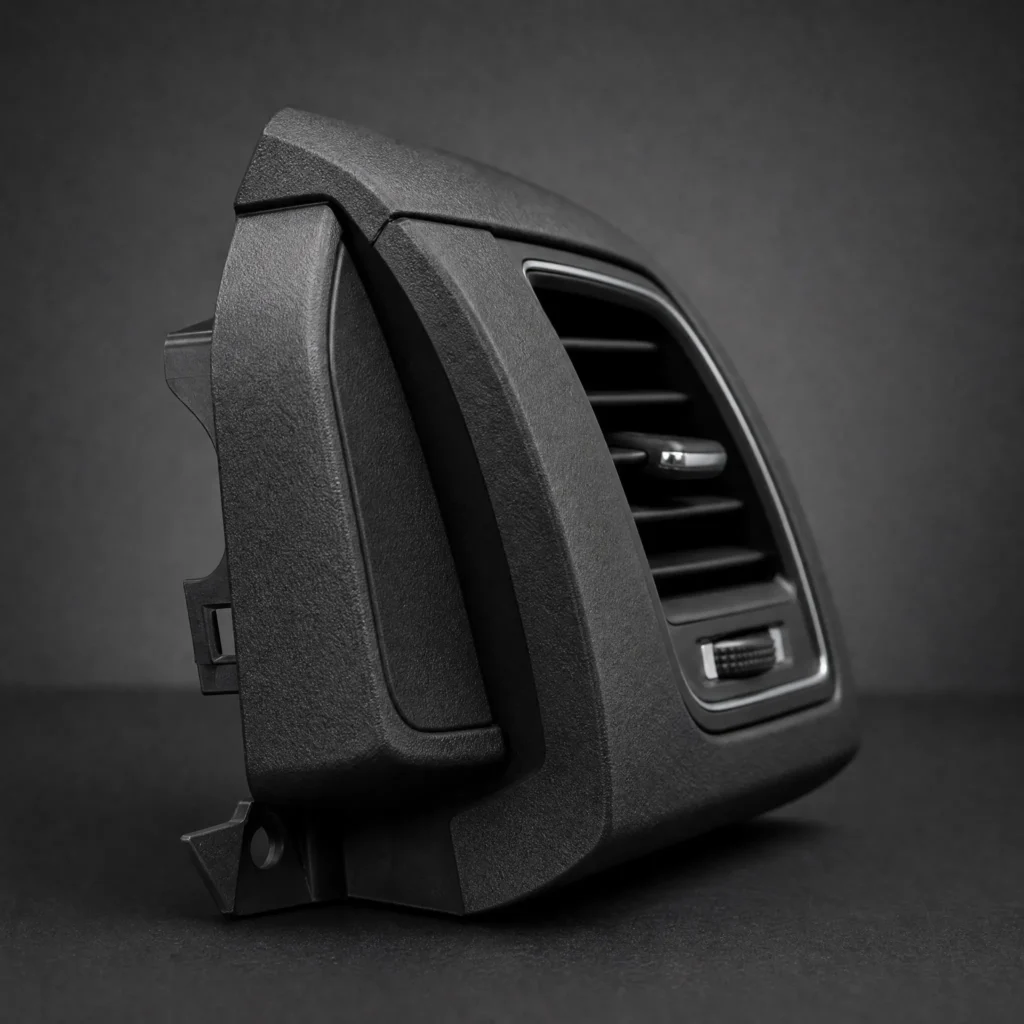
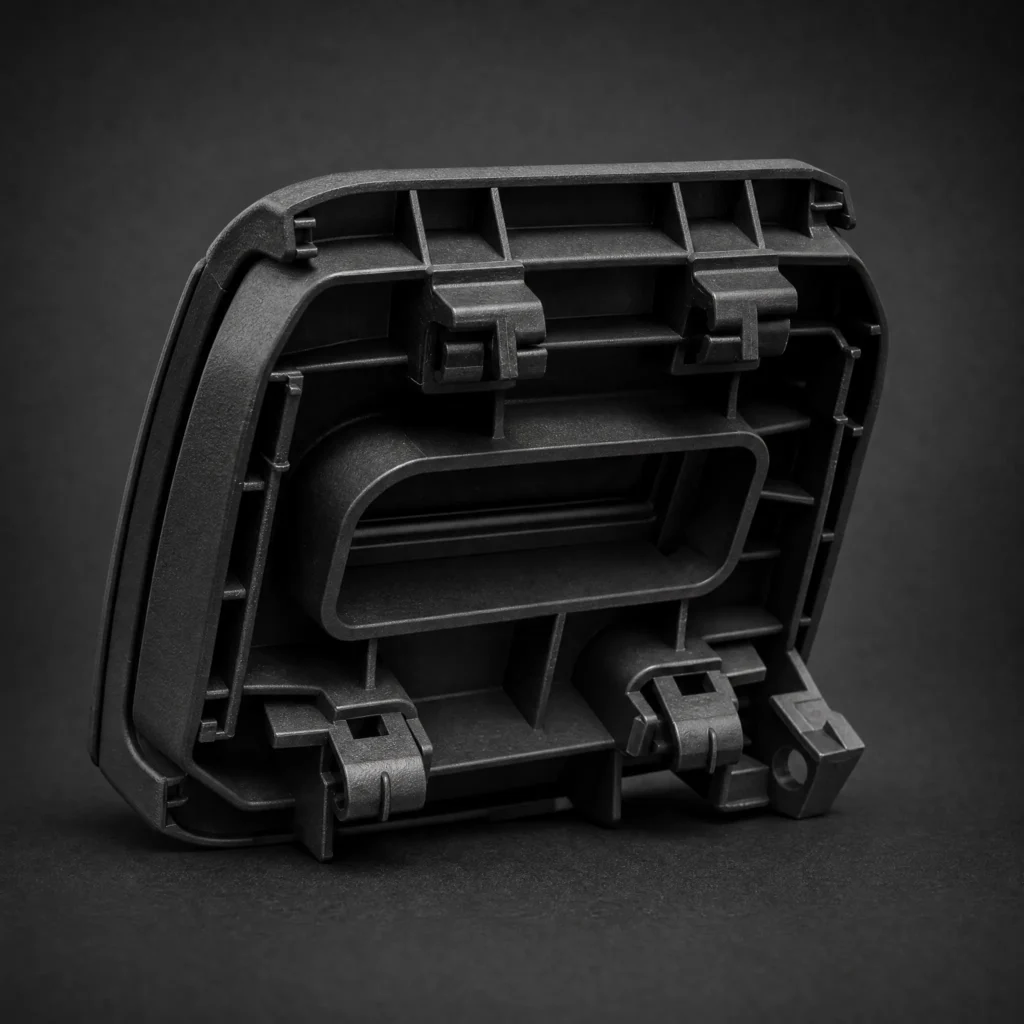
Case 03 | Automotive Interior Components
Multi-Angle Visual Gallery
1. Manufacturing Process & Material Selection
- Core Process: High-Precision Injection Molding + Multi-Angle Lifters & Hydraulic Core-Pulling Hot Runner Mold + Molded-in VDI 27 Spark Erosion Grain Texture.
- Material Grade: Automotive Interior-Grade Polypropylene Copolymer (PP) / PC+ABS Alloy
- Engineering Justification: Ultra-low VOC emission and odor characteristics complying with global automotive cabin standards; high UV/aging resistance; exceptional dimensional stability and squeak/rattle prevention (anti-BSR performance).
- Quality & Tolerances: Exterior Class-A surface compliance (zero flow marks or pin witnesses); snap-fit interlocking tolerances held to ±0.05 mm; overall part warpage ≤0.3 mm.
2. Structural Features & Manufacturing Challenges
- Multi-Slide Kinematic Core-Pulling Mechanism:
- Challenge: Louver blade pivots and internal air guides require complex multi-directional undercut releases. Mold slides easily suffer galling or premature wear over large-volume cycles.
- Solution: Tooling slides engineered with self-lubricating wear plates and Diamond-Like Carbon (DLC) coating. Critical core inserts produced via Wire EDM with 0.005 mm clearance tolerances to ensure smooth, flash-free actuation.
- Sink Mark Elimination on Class-A Visible Surfaces:
- Challenge: Heavy structural retention clips and screw bosses on the B-surface induce thermal sink depressions on the visible A-surface opposite them.
- Solution: Solution: Followed strict DFM nominal wall thickness rules (rib base thickness limited to 50%–60% of nominal wall). Optimized sequential valve-gate filling via Moldflow simulation to push weld lines into non-visible mating seams.
3. Real-World Applications
- Dashboard HVAC Air Outlet & Integrated Bezel: Providing tactile multi-axis airflow direction control, seamlessly flush-mounted into leather-wrapped instrument panels.
- Center Console & Door Trim Functional Bezels: Housing window regulator switches and ambient LED light-guide channels with scratch-resistant, soft-touch matte finishes.